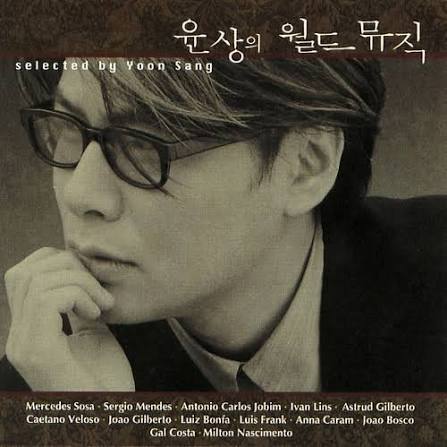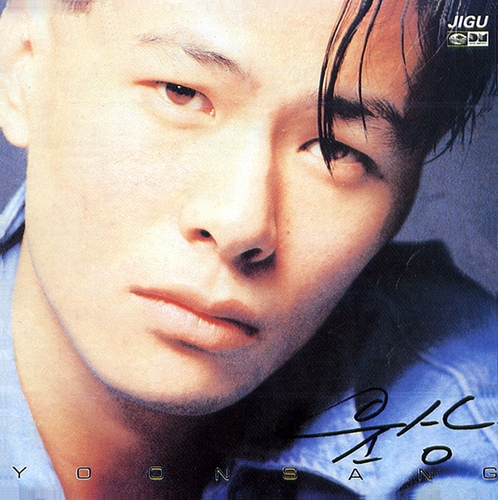
Some musicians are remembered primarily for their hit songs. Others leave a broader mark through the musical ideas they introduce.
Yoon Sang (윤상) belongs to the latter category.
Across a career spanning several decades, he has developed a musical language built around carefully constructed melodies, sophisticated harmony, electronic textures, and emotional restraint.
These qualities appeared in his own recordings, in songs written for other singers, in experimental projects such as No Dance, and later in his work with younger generations of Korean artists.
Rather than belonging to a single genre or era, Yoon Sang’s music offers a useful window into the changing sound of Korean pop itself.
Post Highlights
A Distinct Musical Language
Yoon Sang developed a recognizable approach combining lyrical melodies, sophisticated harmony, synthesizers, and carefully layered arrangements.
Beyond a Single Genre
Although some of his recordings are now rediscovered through the lens of city pop, his catalog also draws from synth-pop, electronic pop, adult contemporary, jazz-influenced harmony, and orchestral arrangement.
A Career Across Generations
From his early solo recordings and No Dance to his later songwriting and production work, Yoon Sang has remained active through major changes in Korean popular music.
Key Information
| Category | Details |
|---|---|
| Legacy Role | Singer-songwriter · Composer · Arranger · Producer |
| Musical Palette | Synth-pop · Electronic Pop · Adult Contemporary · Ballad |
| Additional Influences | AOR · Jazz-influenced harmony · Orchestral arrangement |
| Key Experimental Project | No Dance with Shin Hae-chul |
| Defining Qualities | Melodic precision · Electronic textures · Emotional restraint |
| Lasting Significance | A distinctive musical vocabulary sustained across several generations of Korean pop |
A Musical Language of His Own
One of the most recognizable qualities of Yoon Sang’s music is the balance between sophistication and accessibility.
His songs often begin with clear, memorable melodies, but underneath them are carefully constructed harmonies and arrangements. Synthesizers and electronic textures frequently play important roles without overwhelming the vocals or melody.
This balance became a recurring feature of his work.
Yoon Sang’s music could sound technologically modern while remaining emotionally intimate. Electronic instruments were not simply decorative effects; they became part of the emotional architecture of the song.
That combination helps explain why recordings from different stages of his career can sound noticeably different while still retaining a recognizable musical identity.
Beyond City Pop
International listeners discovering older Korean music today sometimes encounter Yoon Sang through the renewed interest in city pop.
The association is understandable.
Some of his recordings feature polished production, sophisticated chords, electronic instrumentation, and an urban atmosphere that overlaps with qualities now associated with Japanese city pop and its Korean counterparts.
But the label captures only part of his music.
Yoon Sang’s catalog extends across synth-pop, electronic music, adult contemporary, ballad, and other forms of sophisticated pop songwriting. Jazz-influenced harmony and orchestral textures also appear throughout different periods of his work.
His 2000 album Cliché is particularly useful for understanding this breadth.
The album moves between ballad, electronic pop, synth-pop, and other styles while maintaining a coherent musical identity. Tracks such as “Back to the Real Life” demonstrate how electronic production had become fully integrated into Yoon Sang’s songwriting rather than functioning as a stylistic novelty.
For that reason, describing him simply as a city pop artist risks imposing a contemporary genre label on a catalog that developed from a much wider range of influences.
Electronic Sound as Emotional Language
Yoon Sang’s use of synthesizers is particularly important to understanding his music.
Electronic sounds in his recordings are rarely present simply to make a song sound futuristic. Instead, they often shape atmosphere and emotional distance.
A restrained rhythm can create space around a vocal. A synthesizer line can function almost like a second melody. Layers can appear gradually rather than arriving simultaneously.
The result is music that often rewards repeated listening.
A song may initially be remembered for its melody, but subsequent listens reveal small details in harmony, programming, instrumentation, and arrangement.
This attention to detail became one of the most consistent characteristics of Yoon Sang’s work.
No Dance: Pushing Further into Electronic Music
An important chapter in this development came in 1996 with No Dance, Yoon Sang’s project with Shin Hae-chul (신해철).
Both musicians were already interested in synthesizers, programming, and the possibilities of electronic production.
Their collaboration allowed those interests to move closer to the center.
The project album Golden Hit included “Running” (달리기), composed by Yoon Sang with lyrics by his longtime collaborator Park Chang-hak.
The song would later reach another generation through remakes, most notably by S.E.S.
No Dance occupies an interesting place in Yoon Sang’s career because it demonstrates that his interest in electronic production was not separate from his melodic songwriting.
The two developed together.
The Sound of Restraint
Another defining feature of Yoon Sang’s music is emotional restraint.
Korean ballads have often relied on powerful vocals, dramatic climaxes, and highly expressive performances. Yoon Sang frequently takes a different route.
Emotion can emerge from repetition, harmonic movement, empty space, or a small change in arrangement.
The singer does not always need to overwhelm the listener.
This understated approach is especially noticeable in songs such as “The Shadow of Farewell” (이별의 그늘) and “Between Hidden Times” (가려진 시간 사이로).
Rather than treating restraint as the absence of emotion, Yoon Sang often uses it as a way of creating emotional tension.
Essential Listening
For listeners discovering Yoon Sang for the first time, these recordings offer several different entry points into his musical world.
| Song | Why It Matters |
|---|---|
| The Shadow of Farewell (이별의 그늘) | An early signature recording that introduced the elegant, restrained style associated with his solo career. |
| Between Hidden Times (가려진 시간 사이로) | One of his best-known songs, combining lyrical melody with atmospheric production. |
| Always (언제나 그랬듯이) | A strong example of his understated approach to melody and emotional expression. |
| Running (달리기) | A Yoon Sang composition from the 1996 No Dance project that later became widely known through remakes. |
| Back to the Real Life | A key track from Cliché showing how electronic production had become integrated into his mature songwriting. |
Recommended Deep Cut
Back to the Real Life — Cliché (2000)
For listeners interested in Yoon Sang’s electronic side, “Back to the Real Life” is an especially revealing track.
Released on his 2000 album Cliché, the song places synthesizers and programmed production at the center of a characteristically melodic Yoon Sang composition.
Its lyrics contrast mediated images and artificial emotions with the physical world outside the screen, giving the song a theme that fits naturally with its electronic setting.
It captures an important aspect of Yoon Sang’s work: technology is present everywhere, but the subject remains fundamentally human.
Recommended Video Showcase
🎥 Yoon Sang – “Between Hidden Times” (가려진 시간 사이로)
One of Yoon Sang’s signature recordings and a strong introduction to the melodic restraint and atmospheric production that characterize much of his music.
Why His Music Endures
Yoon Sang’s significance is difficult to reduce to one song, one production technique, or one genre.
His career connects several different periods of Korean popular music.
His early recordings belong to the transformation of Korean pop around the turn of the 1990s. No Dance reflects the growing possibilities of electronic production in the mid-1990s. Cliché pushed further into electronically constructed pop at the beginning of the 2000s.
His later songwriting and production work connected those ideas with younger performers and the modern K-pop industry.
Across those changes, certain principles remained remarkably consistent: melody mattered, arrangement mattered, sound itself mattered, and emotion did not have to be exaggerated to be powerful.
Lasting Influence
Influence in popular music is not always easy to measure.
It does not necessarily mean that later musicians directly imitate an earlier artist.
In Yoon Sang’s case, his significance is better understood through the musical possibilities his career represents: sophisticated harmony within mainstream pop, electronic production combined with melodic songwriting, and emotional expression built through restraint rather than excess.
Those ideas now feel familiar within Korean popular music.
When Yoon Sang began developing them, they were much less common.
That distinction is important.
Curator’s Note
Looking across Yoon Sang’s career reveals something more interesting than a collection of successful songs.
It reveals continuity.
The synthesizers changed. Recording technology changed. Korean pop changed dramatically around him.
Yet Yoon Sang continued returning to many of the same fundamental ideas: strong melodies, carefully constructed harmony, attention to sound, and emotional restraint.
That consistency may be the most important part of his legacy.
Rather than defining Korean pop through a single revolutionary moment, Yoon Sang helped expand its possibilities gradually—song by song, arrangement by arrangement, and generation by generation.