When Two Musical Worlds Coexisted
Music history is rarely as simple as one era ending and another beginning.
Looking back today, it’s easy to imagine that Seo Taiji and Boys arrived in 1992 and instantly changed everything. In many ways, they did. Their fusion of rap, dance, rock, and New Jack Swing challenged long-held ideas about what Korean popular music could be.
But history didn’t move overnight.
While a new generation was dancing to “I Know,” millions of Koreans were still buying ballad albums, requesting emotional love songs on the radio, and filling karaoke rooms with heartfelt performances.
The rise of dance music did not replace ballads.
For much of the 1990s, the two genres flourished together.
That coexistence became one of the defining characteristics of Korean popular music during the decade.
More Than Competition
Today, music trends often move at extraordinary speed.
A viral song can dominate the internet for a few weeks before disappearing, replaced by the next trend almost immediately.
The Korean music industry of the early 1990s worked differently.
Without streaming platforms or social media algorithms accelerating every trend, musical styles evolved more gradually. Audiences had room to embrace different genres at the same time.
A teenager might spend the afternoon dancing to Seo Taiji, then return home and listen to Shin Seung-hun before going to bed.
Neither experience felt contradictory.
One represented youthful energy and change.
The other offered comfort and emotional reflection.
Both belonged to everyday life.
Rather than competing for the exact same audience, they often fulfilled different emotional needs.
The Golden Age of the Album
Another reason ballads remained so influential was the culture surrounding albums themselves.
During the 1990s, success wasn’t measured by a single hit.
Listeners invested in complete albums.
An album was something to own, display, lend to friends, and listen to repeatedly. Fans learned every lyric, remembered the sequence of songs, and developed lasting connections with artists through entire records rather than individual singles.
This environment naturally favored singer-songwriters and vocalists whose music rewarded repeated listening.
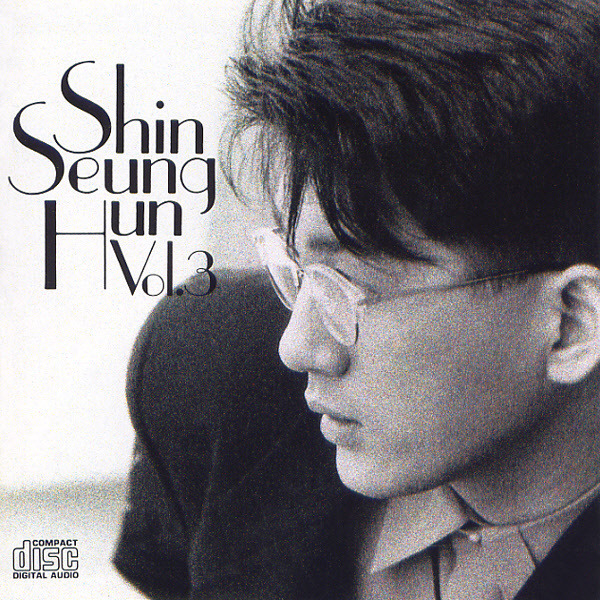
Shin Seung-hun excelled in exactly that world.
His subsequent albums consistently sold in remarkable numbers, and throughout the decade he became known not only for chart-topping title tracks but also for the overall quality of his recordings. His commercial achievements helped establish new benchmarks for physical album sales, demonstrating that ballads could remain both artistically respected and commercially dominant.
Long before streaming statistics became the industry’s preferred measure of success, album sales reflected something more personal.
They represented commitment.
Buying an album meant choosing to bring an artist’s music into your daily life.
Songs That Stayed
Many popular songs enjoy brief moments of success.
Far fewer become part of a country’s collective memory.
Throughout the 1990s, Shin Seung-hun released a remarkable series of hits, including “Reflection of You in Your Smile,” “Invisible Love,” “Because I Love You,” “After a Long Time,” “Somewhere Only A Little Above Me,” and many others that remained beloved long after they left the charts.
His songs appeared everywhere.
They played in cafés and taxis.
They drifted through shopping streets.
Students sang them during university festivals.
Young couples dedicated them to one another.
Families heard them on weekend television programs.
Years later, many would become essential songs in Korea’s karaoke culture, where ordinary people could step behind a microphone and relive memories through music.
That longevity explains why so many Koreans still associate Shin Seung-hun’s voice with the decade itself.
He wasn’t simply producing successful records.
He was creating memories that listeners carried with them for years.
Ballads as Cultural Memory
Perhaps this is what made Korean ballads unique during the 1990s.
They weren’t simply about romance.
They became emotional landmarks.
Ask many Koreans about their university years, their first love, or their early career, and chances are a particular ballad comes to mind almost immediately.
The songs became intertwined with personal history.
As the country modernized at extraordinary speed, ballads offered something constant.
They slowed time.
They encouraged reflection.
They reminded listeners that even during years of rapid change, ordinary emotions remained universal.
That emotional connection explains why so many ballads from the 1990s continue to be rediscovered by younger generations today.
Unlike trends built around fashion or choreography, sincere storytelling ages remarkably well.
Beyond the Charts
By the middle of the decade, Shin Seung-hun had become far more than one successful singer.
He represented a standard.
His popularity demonstrated that technical vocal ability, thoughtful songwriting, and emotional authenticity could still command enormous audiences even as Korean popular music diversified.
Meanwhile, Seo Taiji and Boys opened entirely new creative possibilities for younger musicians.
Rather than cancelling each other out, the two forces expanded Korean music in different directions.
One pushed boldly toward the future.
The other preserved the emotional traditions that audiences continued to cherish.
Together, they created one of the richest periods in the history of Korean popular music.
It was a decade where innovation and tradition didn’t compete.
They evolved side by side.
And that balance would ultimately become one of the greatest strengths of Korean music itself.
A Legacy That Outlived the Decade
Musical eras rarely end all at once.
Even as new genres emerged and younger artists transformed the Korean music industry, the ballads of the 1990s never truly disappeared.
They simply became part of Korea’s cultural memory.
While dance music, hip-hop, and eventually idol groups continued to redefine Korean pop, the emotional storytelling that had defined the ballad era remained deeply rooted in Korean listeners’ hearts.
Shin Seung-hun was one of the few artists who successfully crossed into this new landscape.
Rather than chasing every new trend, he stayed true to the qualities that had first made audiences fall in love with his music: honest lyrics, expressive vocals, and melodies that lingered long after the song had ended.
His career became proof that sincerity never goes out of style.
When Korean Ballads Reached the World
In the early 2000s, another unexpected chapter began.
A romantic comedy called My Sassy Girl became one of the most beloved Korean films of its generation. Released in 2001, it found enormous success not only in South Korea but across East Asia, introducing millions of international viewers to Korean cinema before the global rise of K-pop and streaming platforms.
Its theme song was “I Believe.”
Performed by Shin Seung-hun, the ballad became inseparable from the film’s emotional climax. For many international audiences, it was their first encounter with a Korean ballad.
The song’s success extended far beyond the movie itself. It was translated, covered, and performed in multiple languages across Asia. More than two decades later, it remains one of the best-known Korean ballads ever recorded.
Long before BTS filled stadiums or BLACKPINK topped global charts, songs like “I Believe” were quietly introducing international audiences to the emotional depth of Korean popular music.
Although the term “Hallyu” (Korean Wave) had only begun to emerge, its foundations were already being laid.
More Than a Successful Singer
Looking back today, it would be easy to measure Shin Seung-hun’s career by numbers alone.
His albums sold millions of copies.
Countless music awards.
Years spent at the top of the charts.
Those achievements are impressive.
But they aren’t the reason he still matters.
His real legacy lies in something far less measurable.
He helped define what Korean ballads could be at the precise moment the country was discovering a new cultural identity.
His songs became the soundtrack to first loves, military farewells, university festivals, long bus rides home, and late-night karaoke sessions. They accompanied everyday life in ways statistics can never fully explain.
That is why his music continues to resonate across generations.
Not because it belongs to the past.
But because the emotions it expresses remain timeless.
The Ballad Era and Modern K-pop
Today’s K-pop industry is built on innovation.
Spectacular performances.
Global marketing.
Social media.
International collaborations.
Yet beneath all of those changes, one tradition has remained remarkably consistent.
Korean audiences have always valued emotional storytelling.
Even many of today’s biggest idol groups continue to release heartfelt ballads alongside their dance tracks. Solo vocalists still enjoy enormous respect. Television audition programs continue to celebrate singers capable of moving audiences through nothing more than a microphone and a melody.
The Ballad Era may no longer define Korea’s music industry as it once did.
But its influence can still be heard throughout Korean popular music.
In many ways, modern K-pop inherited not only the ambition of artists like Seo Taiji and Boys, but also the emotional honesty championed by singers such as Shin Seung-hun.
The two traditions never truly replaced one another.
Together, they shaped the sound of modern Korea.
Where to Start Listening
If you’re discovering Shin Seung-hun for the first time, these songs offer an excellent introduction to both the artist and the era he helped define:
• Reflection of You in Your Smile (미소 속에 비친 그대) (1990) – The debut hit that announced the arrival of a new voice.
• Invisible Love (보이지 않는 사랑) (1991) – One of the defining emotional ballads of the decade.
• Because I Love You (널 사랑하니까) (1993) – A classic example of early 1990s Korean ballad songwriting.
• After a Long Time (그 후로 오랫동안) (1994) – One of Shin Seung-hun’s signature ballads of the mid-1990s.
• Somewhere Only A Little Above Me (나보다 조금 더 높은 곳에 니가 있을 뿐) (1996) – A powerful ballad that showcased his vocal maturity.
• I Believe (2001) – The unforgettable theme from My Sassy Girl, which introduced Korean ballads to audiences across Asia.
Each song captures a different chapter of his career while reflecting the evolution of Korean popular music itself.
Curator’s Note
When people tell the story of Korean popular music, they often begin with Seo Taiji and Boys or jump straight to the global rise of K-pop.
But history is rarely that simple.
Before the world discovered Korean idols, another generation found its voice through ballads.
Understanding the 1990s means understanding a Korea that was growing more confident, more connected, and more willing to express its emotions through music.
Shin Seung-hun did not create the Ballad Era on his own.
He became its defining voice.
And sometimes, that’s exactly what history remembers.