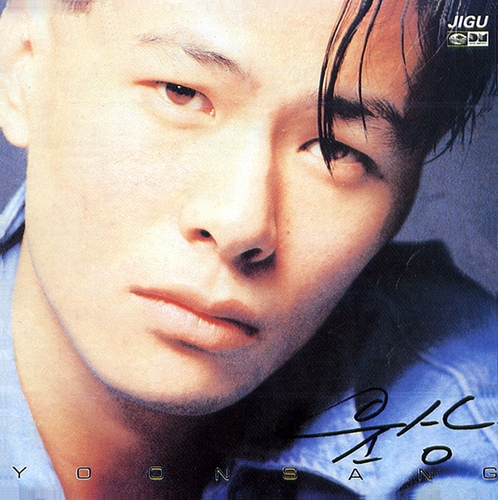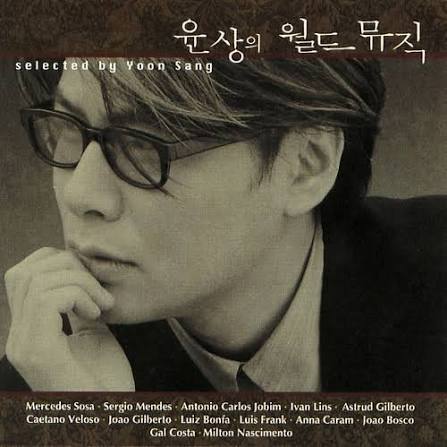
For many listeners, Yoon Sang (윤상) is remembered as the singer behind timeless songs such as “The Shadow of Farewell” and “Between Hidden Times.”
Within the Korean music industry, however, his influence extends far beyond his own recordings.
Over several decades, Yoon Sang has built an equally important career as a composer, arranger, and producer. His work for other artists carries many of the qualities found in his own music: carefully constructed melodies, sophisticated electronic textures, emotional restraint, and an unusually strong attention to arrangement.
His evolution from singer-songwriter to producer was not a departure from his original musical identity. It was an extension of it.
Post Highlights
A Songwriter’s Approach to Production
Yoon Sang’s work with other artists reflects the same attention to melody, arrangement, and atmosphere that defines his own recordings.
A Long Creative Partnership with Kang Susie
Beginning with “Violet Fragrance” in 1990, Yoon Sang composed a remarkable series of songs for Kang Susie, including “Scattered Days,” “Scent in Time,” “To Beautiful You,” and “Winter by Myself.”
From 1990s Pop to Modern K-pop
His songwriting and production work stretches across generations, from Kim Min-woo and Kang Susie to BoA, IU, and Lovelyz.
Key Information
| Category | Details |
|---|---|
| Occupation | Singer-songwriter · Composer · Arranger · Producer |
| Active Period | Late 1980s – Present |
| Key Production Projects | No Dance · OnePiece (원피스) |
| Defining Early Collaborator | Kang Susie (강수지) |
| Later Collaborations | BoA · IU · Lovelyz |
| Signature Elements | Synthesizers · melodic pop · electronic textures · emotional restraint |
From Songwriter to Producer
Yoon Sang’s move into writing and producing for other artists developed naturally alongside his own recording career.
As a musician who was deeply involved in composition, arrangement, and electronic sound design, he approached songs as more than melodies for a vocalist to perform. Arrangement, instrumentation, harmony, and atmosphere were all part of the composition itself.
That approach became especially important when he began working repeatedly with the same artists.
Rather than imposing exactly the same sound on every singer, Yoon Sang often adapted his musical vocabulary to the character of the performer. The clearest early example was his long collaboration with Kang Susie (강수지).
The Kang Susie–Yoon Sang Partnership
Kang Susie’s 1990 debut song “Violet Fragrance” (보라빛 향기) became the beginning of one of Yoon Sang’s most recognizable collaborations outside his own albums.
Kang wrote the lyrics, while Yoon Sang composed the music. The song’s delicate melody and polished pop arrangement complemented her light, restrained vocal style and helped establish the musical image associated with her early career.
The partnership continued well beyond one song.
For Kang Susie’s second album, Yoon Sang composed “Scattered Days” (흩어진 나날들), released in 1991. Kang again wrote the lyrics. The song became one of the best-known ballads of her career and remains closely associated with both artists.
Other Yoon Sang compositions recorded by Kang included “Scent in Time” (시간 속의 향기), “To Beautiful You” (아름다운 너에게), “All I Need Is Time” (필요한 건 시간일 뿐), “Winter by Myself” (혼자만의 겨울), and “Hades” (하데스).
Kang Susie herself has described Yoon Sang as an important musical influence and has identified these songs among the many Yoon Sang compositions she recorded.
Their collaboration was not limited to the beginning of her career. In 1995, Yoon Sang composed “Winter by Myself,” with Kang writing the lyrics. She later recalled receiving Yoon Sang’s melody on a demo tape and writing the lyrics after hearing it.
More than a decade later, the two worked together again, demonstrating how enduring their musical partnership had become.
Writing for the Voices of the 1990s
Kang Susie was not the only major singer to record Yoon Sang’s compositions during this period.
One of his most enduring songs for another artist was Kim Min-woo’s “On the Military Train” (입영열차 안에서).
Released in 1990, the song became closely associated with the experience of young Korean men leaving for compulsory military service. Its subject was distinctly Korean, but Yoon Sang’s melodic writing gave the song an emotional directness that helped it survive far beyond its original release period.
This ability to write songs that were immediately accessible without abandoning his own musical sensibility became an important part of Yoon Sang’s career as a composer.
No Dance: Electronic Pop as a Laboratory
Yoon Sang’s production work also took a more experimental direction.
In the mid-1990s, he joined Shin Hae-chul (신해철) for the project No Dance, bringing together two musicians with a strong interest in synthesizers, programming, and electronic music.
Their 1996 album Golden Hits became an important meeting point between Korean pop songwriting and electronic experimentation.
Among the songs associated with the project was “Running” (달리기), written by Yoon Sang with lyrics by Park Chang-hak. The song later reached another generation when S.E.S. recorded a remake.
No Dance demonstrated another side of Yoon Sang’s work: the studio itself could function as a creative instrument.
That idea would become increasingly important in his later production work.
From BoA to IU
As Korean pop changed in the 2000s and 2010s, Yoon Sang continued writing for younger artists rather than remaining tied to the sound of the 1990s.
For BoA, he composed “The Show Must Go On,” bringing his electronic pop sensibility into the catalog of one of the defining Korean pop stars of the early 2000s.
A particularly memorable later collaboration came with IU.
In 2011, Yoon Sang composed “The Story Only I Didn’t Know” (나만 몰랐던 이야기), with lyrics by Kim Eana.
Instead of building the song around the kind of immediate pop hook often associated with idol singles, the composition unfolds with dramatic restraint. IU’s voice remains at the center while the arrangement gradually deepens the emotional tension.
The collaboration demonstrated how naturally Yoon Sang’s melodic language could work with a singer from a generation that debuted decades after him.
Building the Sound of Lovelyz
Perhaps the clearest example of Yoon Sang’s influence on modern idol pop came through Lovelyz.
For the group’s 2014 debut album Girls’ Invasion, Yoon Sang worked through the production team OnePiece, alongside musicians including Spacecowboy and DAVINK.
The album credits identify OnePiece as the composer and arranger of “Candy Jelly Love,” with Yoon Sang participating directly in programming and mixing. Contemporary album material also emphasized the unusual significance of Yoon Sang taking charge of a girl-group album.
The relationship continued.
OnePiece worked on a sequence of Lovelyz songs including “Candy Jelly Love,” “Hi~,” “Ah-Choo,” and “Destiny (나의 지구).” By the release of A New Trilogy in 2016, Korean media explicitly described OnePiece as a production team led by Yoon Sang and noted its continuing role in Lovelyz’s music.
Instead of simply following the most aggressive electronic trends of mid-2010s K-pop, these recordings often emphasized melody, synthesizers, carefully layered arrangements, and a mixture of brightness and melancholy.
“Destiny” pushed that approach in a darker direction.
Yoon Sang explained at the time that earlier Lovelyz singles had repeatedly explored unrequited love from a bright perspective, while “Destiny” approached the loneliness of that emotion more directly.
That continuity gave Lovelyz something particularly valuable in idol pop: a recognizable musical identity across multiple releases.
Selected Songwriting & Production Discography
Rather than treating every track below as a solo Yoon Sang production, this list includes notable songs he composed or helped create through his production projects.
| Year | Artist | Song | Yoon Sang’s Role / Significance |
|---|---|---|---|
| 1990 | Kang Susie | Violet Fragrance (보라빛 향기) | Composer; beginning of their long creative partnership |
| 1990 | Kim Min-woo | On the Military Train (입영열차 안에서) | Composer; one of his best-known songs written for another singer |
| 1991 | Kang Susie | Scattered Days (흩어진 나날들) | Composer; major ballad from Kang Susie’s second album |
| 1991 | Kang Susie | Scent in Time (시간 속의 향기) | Composer; another key song from their early collaboration |
| 1994 | Kang Susie | To Beautiful You (아름다운 너에게) | Composer; continued their collaboration into the mid-1990s |
| 1995 | Kang Susie | Winter by Myself (혼자만의 겨울) | Composer; enduring winter song written with lyrics by Kang Susie |
| 1995 | Kang Susie | All I Need Is Time (필요한 건 시간일 뿐) | Composer; released on the For You single |
| 1996 | Kang Susie | Hades (하데스) | Composer; darker and more dramatic entry in their catalog |
| 1996 | No Dance | Running (달리기) | Yoon Sang composition from the No Dance project |
| 2003 | BoA | The Show Must Go On | Composer |
| 2011 | IU | The Story Only I Didn’t Know (나만 몰랐던 이야기) | Composer; lyrics by Kim Eana |
| 2014 | Lovelyz | Candy Jelly Love | OnePiece composition and arrangement; Yoon Sang participated in programming and mixing |
| 2015 | Lovelyz | Ah-Choo | OnePiece composition; central to the group’s early musical identity |
| 2016 | Lovelyz | Destiny (나의 지구) | Created with OnePiece; developed the group’s sound in a darker, minor-key direction |
Recommended Video Showcase
🎥 1. Kang Susie – “Scattered Days” (흩어진 나날들)
One of the defining songs of the Kang Susie–Yoon Sang partnership, written by Kang Susie and composed by Yoon Sang.
🎥 2. IU – “The Story Only I Didn’t Know” (나만 몰랐던 이야기)
A 2011 collaboration that introduced Yoon Sang’s restrained, dramatic melodic style to a new generation of listeners.
🎥 3. Lovelyz – “Destiny” (나의 지구)
A key example of the sound Yoon Sang and OnePiece developed with Lovelyz: melodic, electronic, carefully layered, and emotionally bittersweet.
Curator’s Note
Some composers become associated with a particular singer. Others become associated with a particular era.
Yoon Sang has managed to cross both boundaries.
His compositions for Kang Susie helped define an important strand of early-1990s Korean pop. His work with artists such as BoA and IU carried his songwriting into new generations, while his involvement with OnePiece and Lovelyz demonstrated that his musical language could function inside the modern K-pop production system as well.
The technology changed. The performers changed. The structure of the Korean music industry changed.
But many of the qualities associated with Yoon Sang’s music remained remarkably consistent: melodic precision, sophisticated arrangements, electronic textures, and an unwillingness to treat emotion as something that always needs to be loud.
That continuity is what makes his career behind the scenes as important as the records released under his own name.
And it also explains why Yoon Sang occupies such an unusual place in Korean popular music history: he did not simply adapt to several generations of Korean pop.
His musical language became part of them.