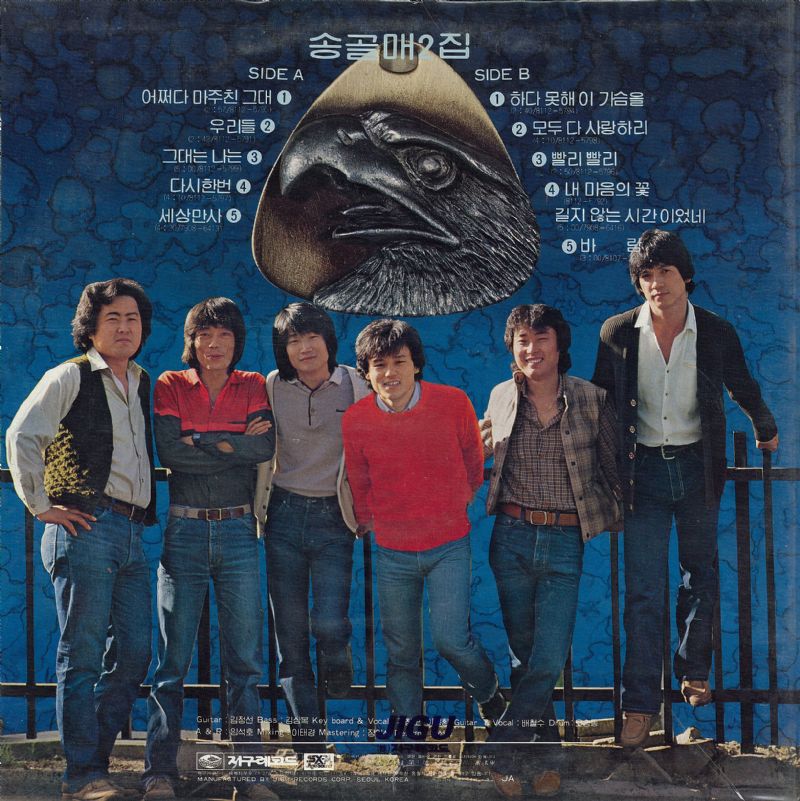
Before idol groups transformed Korean popular music, one band had already demonstrated that rock could become a mainstream phenomenon. That band was Songolmae (송골매).
Emerging from Korea’s vibrant college band scene in the late 1970s, Songolmae blended hard rock, pop, funk, and melodic ballads into a sound that resonated with audiences nationwide. At the heart of the band’s success was the contrasting chemistry between Bae Cheol-soo, whose gritty, husky voice embodied the spirit of Korean rock, and Koo Chang-mo, whose soaring tenor and melodic songwriting broadened the band’s appeal far beyond traditional rock audiences.
Together, they helped define the sound of Korean rock during the 1980s and left a legacy that continues to influence Korean popular music today.
Post Highlights
- The Defining Korean Rock Band of the 1980s: One of the first Korean bands to achieve nationwide mainstream success while remaining firmly rooted in rock music.
- Two Voices, One Band: The contrasting musical styles of Bae Cheol-soo and Koo Chang-mo created one of the most memorable vocal partnerships in Korean popular music.
- Beyond the Band: Following Songolmae’s peak years, Bae Cheol-soo became one of Korea’s most respected music broadcasters, while Koo Chang-mo launched a successful solo career that helped Korean music reach audiences beyond the country.
Key Information
| Category | Details |
|---|---|
| Band | Songolmae (송골매) |
| Formed | 1979 |
| Genres | Hard Rock, Pop Rock, Funk Rock |
| Key Members | Bae Cheol-soo, Koo Chang-mo |
| Known For | Dual-vocal chemistry, energetic live performances, enduring rock classics |
| Legacy | One of the defining Korean rock bands of the 1980s |
From Campus Rock to National Stardom
Songolmae emerged from Korea’s thriving college band culture, where university music festivals served as an important stage for young musicians.
Bae Cheol-soo, originally the drummer and vocalist of the campus hard-rock band Runners (활주로), joined forces with members of Black Tetra, including the gifted vocalist Koo Chang-mo. As Songolmae evolved, Bae stepped forward as the band’s frontman while taking on rhythm guitar, creating a distinctive two-vocal lineup that became one of the band’s defining characteristics.
Known for his gritty, husky voice and understated stage presence, Bae gave Songolmae its grounded rock identity. In contrast, Koo’s bright tenor, expressive vocals, and melodic songwriting expanded the band’s appeal well beyond rock audiences. Together, they formed one of the most recognizable partnerships in Korean popular music.
Songs That Defined an Era
🎥 Songolmae - ‘A Chance Encounter’ (1982 KBS Music Awards) 송골매 - ‘어쩌다 마주친 그대’
Songolmae’s breakthrough came with the release of their second album in 1982.
The album featured “A Chance Encounter” (어쩌다 마주친 그대), built around an instantly recognizable opening riff, infectious bass line, and irresistible groove. The song quickly became one of the defining Korean pop-rock hits of the decade and remains one of the band’s signature recordings.
The same album also included enduring classics such as “I’ll Love Everything” (모두 다 사랑하리) and a newly recorded version of “All Things in the World” (세상 만사). Although “All Things in the World” had originally appeared on Songolmae’s 1979 debut album, its 1982 re-recording introduced the song to a much wider audience and helped establish it as one of the band’s best-known classics.
Together, these songs showcased Songolmae’s ability to move effortlessly between energetic rock, melodic pop, and emotionally rich ballads.
A Defining Moment in Korean Television
Songolmae’s history also includes one of the most remembered incidents in Korean television history.
During a live television performance in 1983, Bae Cheol-soo suffered a severe electric shock after touching a faulty microphone. Although the accident was life-threatening, he recovered and eventually returned to the stage.
The incident became one of the defining moments in Korean broadcasting history and further strengthened Songolmae’s reputation as a resilient live band.
Koo Chang-mo’s Solo Success and an Early Pan-Asian Milestone
🎥 Koo Chang-mo - ‘Heenari’ (1985) 구창모 - ‘희나리’ (Green Firewood)
In 1985, Koo Chang-mo left Songolmae to begin a solo career.
His emotional ballad “Heenari” (희나리) quickly became one of the biggest Korean hits of the decade.
The song later gained international recognition when Hong Kong superstar Alan Tam (譚詠麟) recorded a Cantonese version titled “Yau Cing Seoi Jyut” (有情歲月), introducing the melody to audiences across East Asia. Long before the Korean Wave emerged, it became one of the earliest examples of a Korean popular song finding commercial success through a major overseas remake.
Metaphorical Meaning
“Firewood that is too damp to burn cleanly, producing heavy smoke instead of a bright flame.”
Bae Cheol-soo and the Voice of Korean Radio
Following Songolmae’s peak years, Bae Cheol-soo began a second career that would become just as influential as his work with the band.
On March 19, 1990, he launched Bae Cheol-soo’s Music Camp on MBC FM4U.
Over the following decades, the program introduced generations of Korean listeners to Western rock, pop, jazz, blues, and alternative music while also featuring countless Korean and international musicians.
Its reputation grew to the point where appearances by visiting international artists became a hallmark of the program. Musicians ranging from Metallica and Deep Purple to globally recognized pop stars have joined Bae for interviews, reinforcing the show’s status as one of South Korea’s most respected music radio programs.
More than three decades after its debut, Music Camp remains one of the longest-running and most influential music programs in Korean broadcasting history, while Bae Cheol-soo himself is widely regarded as one of the country’s foremost authorities on popular music.
Essential Songs
| Song | Year | Why It Matters |
|---|---|---|
| A Chance Encounter (어쩌다 마주친 그대) | 1982 | One of the defining Korean pop-rock songs of the 1980s, remembered for its iconic opening riff. |
| I’ll Love Everything (모두 다 사랑하리) | 1982 | Highlights Koo Chang-mo’s soaring vocals and Songolmae’s melodic rock sound. |
| All Things in the World (세상 만사) | 1982 | A re-recorded version that became one of Songolmae’s signature hits, showcasing Bae Cheol-soo’s distinctive vocal style and observational lyrics. |
| Heenari (희나리) | 1985 | Koo Chang-mo’s signature solo hit, later remade in Hong Kong as “Yau Cing Seoi Jyut” (有情歲月) and recognized as an early example of Korean music reaching audiences across Asia. |
Legacy
Songolmae demonstrated that rock music could achieve mainstream popularity without sacrificing musicianship. By blending accessible melodies with authentic rock instrumentation, the band expanded the possibilities of Korean popular music during the 1980s. They bridged Korea’s campus band culture and the mainstream music industry, proving that rock music could achieve both artistic credibility and widespread popular success.
Their influence continued well beyond the band’s peak years through the individual careers of Bae Cheol-soo and Koo Chang-mo, both of whom became enduring figures in Korean music history.
Today, Songolmae is remembered not simply as a successful rock band, but as one of the groups that helped establish the musical foundation upon which later generations of Korean popular music—including modern K-pop—would be built.
Curator’s Note
Looking back today, Songolmae feels like a bridge between two eras. They emerged from Korea’s college band culture, embraced mainstream success without abandoning their musical identity, and demonstrated that rock music could thrive alongside popular music. Their songs remain instantly recognizable decades later, while the careers of Bae Cheol-soo and Koo Chang-mo continue to shape Korean music in very different ways. For anyone exploring the history of Korean popular music, Songolmae represents an essential chapter—not only because of their unforgettable songs, but because they proved that authenticity, musicianship, and popular success could coexist.