When international fans think of classic Korean co-ed groups, names like Roo’ra, Cool, or Koyote usually come to mind.
However, before those groups became household names, another act had already demonstrated the commercial potential of the co-ed dance group format.
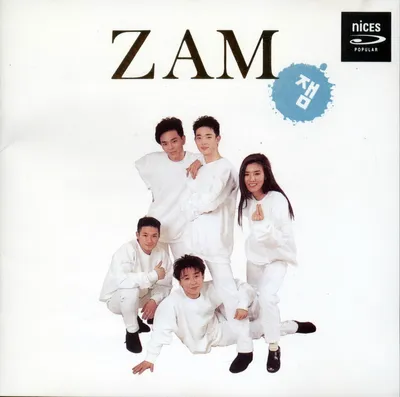
That group was ZAM (잼).
Debuting in late 1992, ZAM emerged during one of the most transformative periods in Korean popular music. Following the breakthrough of Seo Taiji and Boys, audiences were rapidly embracing dance-oriented performances, while entertainment companies were beginning to experiment with new ways of producing pop groups for younger listeners.
Although their career was relatively short, ZAM occupies an important place in K-pop history as one of Korea’s earliest professionally planned co-ed dance groups.
A New Generation of Dance Pop
ZAM made its debut with “I Won’t Stop” (난 멈추지 않는다), an energetic dance-pop song influenced by contemporary European house music.
The group’s polished choreography, coordinated styling, and upbeat sound immediately reflected the changing direction of Korean popular music in the early 1990s.
Rather than presenting a single star backed by supporting dancers, ZAM emphasized teamwork. Each member contributed a distinct role through vocals, dance, or stage presence, creating a balanced group performance that would later become a familiar characteristic of K-pop.
The group’s debut also proved that audiences were becoming increasingly interested in performance-driven pop rather than traditional vocal-centered acts.
The Appeal of a Co-ed Group
One of ZAM’s defining characteristics was its co-ed lineup.
At a time when most Korean pop acts were either solo singers or all-male or all-female groups, ZAM offered a different visual dynamic by combining male and female performers on the same stage.
The group’s only female member, Yoon Hyun-sook, quickly became one of its most recognizable faces thanks to her confident stage presence and strong dancing.
She later found renewed success as one half of the popular female duo COCO, making her one of the few artists to leave a mark in both co-ed and female group history.
Why ZAM Matters
ZAM’s greatest contribution was not simply releasing successful songs.
The group represented an early example of entertainment companies deliberately assembling performers into a dance-oriented pop group with clearly defined positions and coordinated concepts.
Although the idol training system was still years away from becoming fully established, ZAM demonstrated how carefully planned group dynamics, synchronized performances, and complementary member roles could appeal to young audiences.
Their success also encouraged the industry to continue exploring the co-ed format, paving the way for later groups such as Roo’ra, Cool, and eventually Koyote, each of which developed the concept in different directions.
A Short Career, But a Lasting Influence
Like many early 1990s dance groups, ZAM experienced member changes and remained active for only a few years.
Yet their influence extends beyond their relatively brief career.
Looking back today, ZAM represents an important transitional moment in Korean pop history—a bridge between the revolutionary impact of Seo Taiji and Boys and the explosion of co-ed dance groups that followed throughout the mid-1990s.
They may not be the first name people remember from the era, but they helped prove that a well-planned co-ed dance group could succeed in Korea’s rapidly changing music industry.
Did You Know?
Yoon Hyun-sook later became a member of the successful duo COCO before eventually leaving the entertainment industry and building a career as an entrepreneur in the United States.
Recommended Videos
| 🎥 ZAM – “Never Stop” (난 멈추지 않는다) | Saturday Night Music Show (June 12, 1993) |