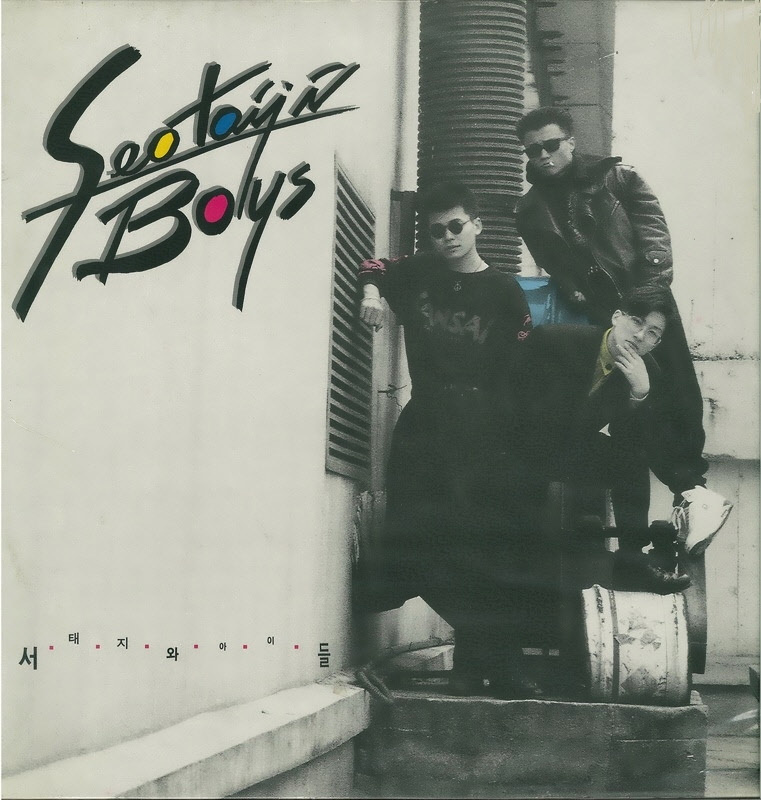
Seo Taiji and Boys: The Group That Changed Korean Music Forever
To understand how K-pop became the global cultural phenomenon it is today, we have to travel back to a single, historic date: April 11, 1992.
Many international fans assume K-pop began with first-generation idol groups like H.O.T. or S.E.S. in the late 1990s. While those groups established the idol industry, the foundation of modern K-pop was laid several years earlier by a trio that completely transformed Korean popular music: Seo Taiji and Boys (서태지와 아이들).
Their influence reached far beyond hit songs. They reshaped how music was created, performed, promoted, and consumed in Korea. To understand why their debut mattered so much, we first need to look at the music scene they entered.
Before 1992: A Music Industry Built for Adults
In the late 1980s and early 1990s, South Korea’s popular music industry was largely geared toward adults. Mainstream radio and television were dominated by emotional ballads and melodic soft rock.
Artists such as Shin Seung-hun, often called the “Emperor of Ballads,” and Lee Moon-sae became household names, while legendary singer-songwriters like Cho Yong-pil defined the era. The industry valued exceptional vocal ability, emotional delivery, and poetic lyrics far more than performance or choreography.
Concert audiences typically sat, listened, and quietly appreciated the music. Teenagers certainly enjoyed popular songs, but the industry wasn’t designed with them in mind.
The Early Dance Music Pioneers
Even during the height of the ballad era, a few artists began introducing more energetic, performance-driven music to Korean audiences.
Kim Wan-sun helped establish dance-focused pop as a viable genre, combining strong vocals with confident stage performances. Sobangcha brought synchronized choreography and dynamic movement to television, while Park Nam-jung popularized modern dance techniques that drew comparisons to Michael Jackson.
These artists demonstrated that Korean audiences were ready for music that was as exciting to watch as it was to hear. However, they were still working within the traditional entertainment system.
What the industry had not yet seen was a group that would completely redefine both the sound and the structure of Korean popular music.
April 11, 1992: The Performance That Changed Everything

Everything changed during a televised music showcase.
A young musician named Seo Taiji, joined by dancers Yang Hyun-suk (who would later found YG Entertainment) and Lee Juno, performed their debut song “Nan Arayo (I Know)” (난 알아요).
The performance blended American hip-hop rhythms, rock influences, Korean lyrics, and breakdancing in a way Korean audiences had never experienced before.
The judges gave the performance a surprisingly low score, but viewers reacted very differently. “Nan Arayo” quickly became one of the biggest hits of 1992, marking a turning point in the history of Korean popular music.
How Seo Taiji and Boys Reshaped the Industry
Seo Taiji and Boys didn’t simply introduce a new musical style. They fundamentally changed the way the Korean music industry operated.
Teenagers Became the Center of Pop Culture
For the first time, teenagers became the industry’s most influential audience.
Young fans eagerly bought albums and cassette tapes, adopted the group’s fashion—from oversized clothing to bucket hats—and formed organized fan communities. Entertainment companies quickly realized that youth culture had become a powerful economic force, paving the way for the agency-driven idol system that emerged later in the decade.
Performance Became Just as Important as the Music
Before Seo Taiji and Boys, choreography usually played a supporting role.
They made dance an essential part of artistic identity, combining music, movement, fashion, and stage production into a single performance. That integration remains one of K-pop’s defining characteristics today.
Pop Music Could Speak for Young People
Seo Taiji also challenged the idea that pop music should avoid social issues.
Songs like “Classroom Idea” (교실이데아) criticized Korea’s highly competitive education system, while “Come Back Home” addressed the growing problem of runaway teenagers. The song was later credited by government agencies with encouraging many young people to return home.
Their music demonstrated that commercial success and meaningful social commentary could coexist.
Popularizing the Modern Comeback Cycle
One of Seo Taiji’s most lasting contributions was changing how artists promoted new music.
At the time, Korean musicians were generally expected to appear continuously on television and radio while simultaneously preparing their next releases, leaving little time for creative development.
Seo Taiji took a different approach. After completing promotions for an album, the group stepped away from the public eye to focus entirely on creating new music before returning with a fresh concept.
Although this wasn’t the invention of the comeback itself, it helped establish the modern promotional cycle that later became standard throughout the K-pop industry: a period of preparation followed by a highly anticipated return.
Today, every teaser schedule, concept photo, comeback trailer, and album rollout reflects a model that Seo Taiji helped popularize.
A Legacy That Still Shapes K-pop
Seo Taiji and Boys retired in 1996 while still at the height of their popularity.
Soon afterward, entertainment companies began introducing the first generation of systematically trained idol groups, including H.O.T., S.E.S., and Sechs Kies. These groups expanded on the cultural and commercial foundations that Seo Taiji and Boys had established.
Modern K-pop has evolved in ways no one could have imagined in 1992. Yet many of its defining features—performance-focused stages, youth-centered marketing, meaningful storytelling, and carefully planned comeback cycles—can all be traced back to the revolution that began with Seo Taiji and Boys.
Without that moment in 1992, K-pop as we know it today would almost certainly look very different.