When discussing the history of Korean popular music, few artists have influenced both how music is recorded and how it is performed as profoundly as Lee Seung-hwan (이승환).
Since his debut in 1989, Lee Seung-hwan has built a career defined not only by hit songs but also by an unwavering pursuit of musical excellence. As a singer, songwriter, producer, concert director, and founder of his own record label, he consistently challenged the standards of Korean pop music, raising expectations for studio production, live performance, and artistic independence.
Nicknamed “The Little Prince” (어린왕자) early in his career for his youthful image and romantic ballads, Lee gradually transformed into one of Korea’s most respected musicians. Today, he is widely recognized as the “King of Live” (라이브의 황제)—a title earned through decades of groundbreaking concerts and meticulous attention to sound quality.
Post Highlights
The King of Live
Raised the standard for Korean live concerts through exceptional vocals, ambitious stage production, and marathon performances.
A Pioneer of High-End Music Production
Among the first Korean pop artists to invest extensively in world-class recording, mixing, and mastering, helping elevate the technical quality of Korean pop albums.
Independent Musician
Founded Dream Factory, maintaining creative independence while producing music on his own terms and supporting younger artists.
One of Korea’s Most Enduring Artists
More than three decades after his debut, Lee Seung-hwan continues to perform, record, and influence new generations of musicians.
Key Information
| Category | Details |
|---|---|
| Artist | Lee Seung-hwan (이승환) |
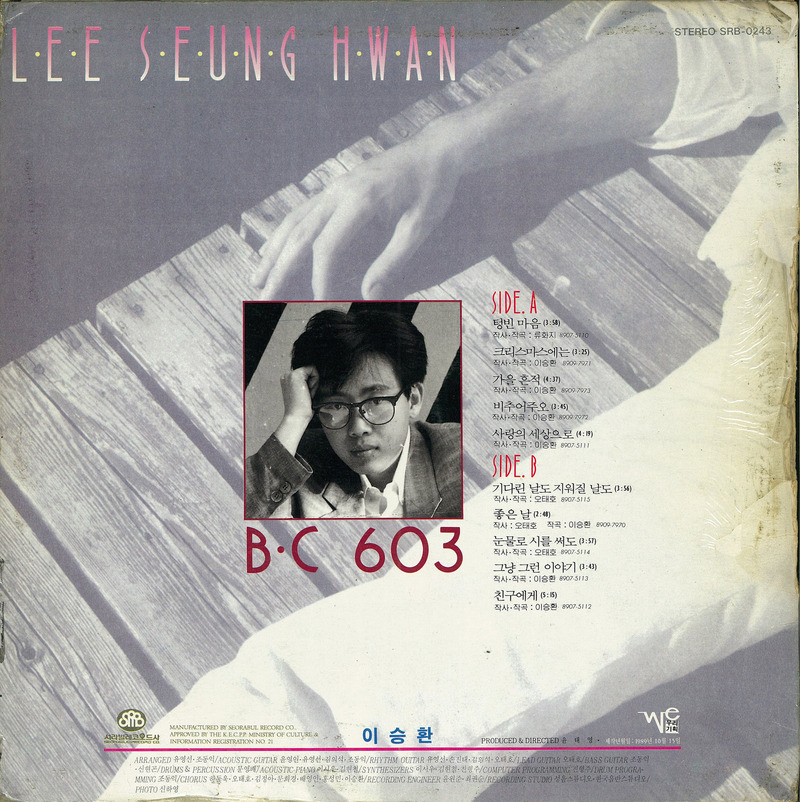
| Debut | 1989 (Album: BC 603) |
| Roles | Singer, Songwriter, Record Producer, Concert Director |
| Record Label | Dream Factory |
| Known For | Live performances, music production, artistic independence |
| Signature Style | Pop-rock ballads, orchestral arrangements, powerful live vocals |
From “The Little Prince” to Musical Perfectionist
Lee Seung-hwan debuted in 1989 with his self-produced album BC 603, featuring the hit single “Empty Heart” (텅 빈 마음). His clear vocals, emotional delivery, and youthful image quickly made him one of Korea’s most popular new artists.
Yet commercial success was never his final goal.
Behind the scenes, Lee became increasingly interested in every aspect of music production. Rather than treating recording as a technical process handled by others, he immersed himself in arranging, engineering, and production, believing that every detail—from microphone placement to final mastering—could shape the listener’s experience.
This pursuit of perfection led him to work with internationally respected recording and mastering engineers at a time when such investments were still uncommon in the Korean music industry. His commitment helped raise expectations for the overall sound quality of Korean popular music.
Redefining Korean Live Performance
If Lee Seung-hwan changed the way Korean pop records sounded, he also transformed the way audiences experienced live music.
During the early 1990s, many concerts were relatively simple productions, often functioning as extensions of television promotions. Lee envisioned something different. To him, a concert was not merely a place to sing familiar songs—it was a complete artistic experience.
He invested heavily in professional sound systems, sophisticated lighting, large-scale stage design, and live arrangements, helping establish new production standards for Korean concerts.
His dedication to live performance earned him the nickname “The King of Live.” Audiences came to expect not only flawless vocals but also carefully crafted performances that combined musical precision with theatrical presentation.
Equally remarkable was his endurance. Lee became known for marathon concerts lasting several hours and featuring dozens of songs performed entirely live, demonstrating an exceptional level of preparation and musicianship.
Today, many of the production values commonly associated with large-scale Korean concerts reflect standards that artists like Lee Seung-hwan helped establish.
Building Dream Factory
In an era when many artists relied heavily on major entertainment companies, Lee Seung-hwan chose a different path.
He founded Dream Factory, allowing him to maintain creative control over his music while supporting younger musicians and producers. The label became a symbol of artistic independence, demonstrating that commercial success and creative autonomy could coexist within the Korean music industry.
This philosophy extended beyond business. Whether producing albums or directing concerts, Lee consistently prioritized musical quality over commercial convenience—a principle that has defined his career for more than three decades.
Essential Songs
Lee Seung-hwan – “As Much as the Love Scattered in the World” (KBS Noh Young-shim’s Small Concert, 1993)
Lee Seung-hwan – “For Thousand Days” (KBS Gayo Top 10)
| Song | Year | Why It Matters |
|---|---|---|
| Empty Heart (텅 빈 마음) | 1989 | The breakthrough hit that introduced Lee Seung-hwan to the Korean public. |
| Your Heart Toward Me (너를 향한 마음) | 1991 | One of Lee Seung-hwan’s signature early hits, remembered for its emotional melody and enduring popularity. |
| As Much as the Love Scattered… (세상에 뿌려진 사랑만큼) | 1991 | One of the defining Korean pop ballads of the early 1990s. |
| For Thousand Days (천 일 동안) | 1995 | Widely regarded as one of his signature masterpieces, celebrated for its orchestral arrangement and emotional depth. |
| Request (제발) | 1999 | Demonstrates his mature pop-rock sound and exceptional vocal range. |
Legacy
Lee Seung-hwan’s legacy extends far beyond chart success.
He demonstrated that Korean popular music could achieve world-class production quality without compromising artistic identity. His insistence on exceptional sound engineering, ambitious live performances, and creative independence reshaped expectations for both audiences and fellow musicians.
More importantly, he proved that longevity in popular music is built not only on memorable songs, but also on continuous artistic growth. More than thirty years after his debut, Lee Seung-hwan remains one of the most respected and influential figures in Korean popular music.
Curator’s Note
Among the many artists featured in K-pedia, Lee Seung-hwan stands out because he continuously expanded the possibilities of what a Korean pop artist could be.
He was never satisfied with simply releasing successful albums. Instead, he pursued better recordings, better concerts, and better ways of presenting music to audiences. That relentless commitment to craftsmanship transformed not only his own career but also the expectations surrounding Korean popular music.
Listening to Lee Seung-hwan today reveals an artist who has always placed musical integrity above trends. His career reminds us that great popular music is measured not only by hit songs, but also by an enduring commitment to excellence.