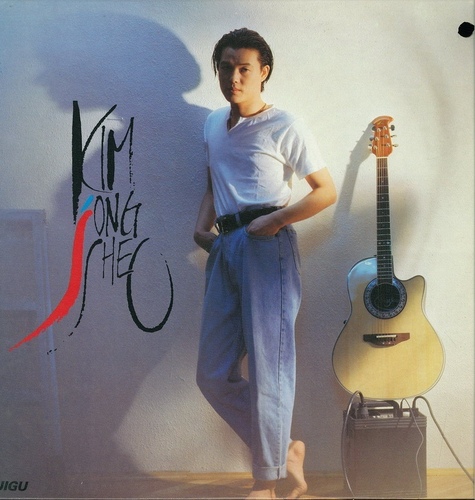
Before Korean rock became widely accepted by mainstream audiences, Kim Jong-seo (김종서) proved that a heavy metal vocalist could become one of the country’s biggest pop stars without abandoning his identity as a rock musician.
Known for his soaring vocals, powerful stage presence, and unmistakable long hair, Kim Jong-seo became one of the defining figures of Korean rock in the late 1980s and 1990s. His success helped bridge the gap between underground rock culture and mainstream Korean popular music, inspiring generations of musicians who followed.
Post Highlights
A Pioneer of Korean Rock
Kim Jong-seo played a pivotal role in the evolution of Korean rock through his work with influential bands including Sinawe, Boohwal, and Karisma, before launching one of the most successful solo careers in Korean rock history.
From Heavy Metal to Mainstream Success
His 1992 solo debut album sold more than one million copies, proving that rock music could achieve massive commercial success in Korea.
A Historic Connection to Seo Taiji
In 1990, Kim Jong-seo returned as the vocalist for Sinawe’s fourth album, where bassist Seo Taiji was also a member. Their collaboration represents one of the most fascinating intersections in Korean music history.
Key Information
| Category | Details |
|---|---|
| Artist | Kim Jong-seo (김종서) |
| Debut | Early 1980s |
| Associated Bands | Sinawe (시나위) · Boohwal (부활) · Karisma (카리스마) |
| Solo Debut | 1992 (Incurable / You Who Don’t Answer) |
| Genres | Hard Rock · Heavy Metal · Pop Rock · Rock Ballad |
| Known For | Bringing Korean rock into the mainstream while remaining true to his rock roots |
Building Korean Rock
Before becoming a solo superstar, Kim Jong-seo established himself as one of Korea’s premier rock vocalists through several legendary bands.
He first gained recognition with Sinawe, one of Korea’s pioneering heavy metal bands. Although originally associated with the band’s earliest lineup, he returned in 1990 as the lead vocalist for Sinawe’s fourth album, Set My Fire.
One of the album’s most intriguing historical details is that its bassist was a young Seo Taiji, two years before the formation of Seo Taiji and Boys.
Looking back, the album brought together two musicians who would soon reshape Korean popular music in entirely different ways—Kim Jong-seo through rock and Seo Taiji through a revolutionary blend of dance, hip-hop, and pop.
Kim Jong-seo also spent important periods with Boohwal and Karisma, further establishing his reputation as one of Korea’s greatest rock vocalists.
From Heavy Metal to Mainstream Superstar
In 1992, Kim Jong-seo embarked on his solo career with the album Incurable / You Who Don’t Answer (대답 없는 너).
Selling more than one million copies, the album transformed him from a respected heavy metal singer into a national pop-rock star.
Remarkably, this breakthrough came in the same year that Seo Taiji and Boys revolutionized Korean popular music.
While Seo Taiji redefined mainstream pop through hip-hop and dance, Kim Jong-seo demonstrated that rock music could also captivate the general public without sacrificing its musical identity.
Together, they expanded the possibilities of Korean popular music in very different—but equally influential—ways.
Essential Songs
Incurable / You Who Don’t Answer (대답 없는 너) (1992)
Kim Jong-seo’s solo debut and breakthrough hit. The song introduced his emotionally charged rock ballad style to a nationwide audience and became one of the defining songs of his career.
🎥 Kim Jong-seo – “An Answerless You” SBS Inkigayo Ep. 28 (1992.06.23)
Winter Rain (겨울비) (1993)
Originally recorded during Kim Jong-seo’s time with Boohwal, this song was reinterpreted for his second solo album. The new version transformed it into one of the greatest Korean rock ballads ever recorded, combining emotional vocals with soaring guitar melodies.
Plastic Syndrome (플라스틱 신드롬) (1995)
One of Kim Jong-seo’s most uncompromising rock songs, “Plastic Syndrome” criticizes materialism and modern consumer culture through powerful guitar riffs and socially conscious lyrics. It remains one of the finest examples of Korean mainstream hard rock.
Beautiful Restriction (아름다운 구속) (1996)
Perhaps Kim Jong-seo’s most universally loved song. With its bright melodies and accessible pop-rock sound, “Beautiful Restriction” proved that rock music could be energetic, uplifting, and commercially successful at the same time. Even today, it remains one of Korea’s most recognizable rock songs.
🎥 Kim Jong-seo – “Beautiful Restriction” KBS Gayo Top 10
Why Kim Jong-seo Matters
Kim Jong-seo’s significance extends far beyond his impressive record sales.
He helped redefine what Korean rock could become.
Before his success, heavy metal and hard rock were often viewed as niche genres with limited commercial appeal.
Kim Jong-seo changed that perception by showing that rock music could retain its artistic identity while reaching mainstream audiences.
His influence can still be heard in countless Korean rock musicians today.
Legacy
Few artists have successfully balanced artistic credibility and popular success as consistently as Kim Jong-seo.
His career spans pioneering heavy metal bands, historic collaborations, million-selling solo albums, and some of the most beloved rock ballads in Korean music history.
More importantly, he demonstrated that Korean rock could stand proudly alongside any mainstream genre, inspiring future generations to pursue rock music without compromise.
Curator’s Note
One of the most fascinating moments in Korean music history occurred in 1990, when Kim Jong-seo returned to Sinawe as vocalist while a young bassist named Seo Taiji joined the same lineup.
Few could have imagined that two members of that band would soon reshape Korean popular music in completely different ways.
Seo Taiji would ignite the modern K-pop revolution.
Kim Jong-seo would prove that rock music could become part of Korea’s musical mainstream.
Together, they represent two different paths that transformed Korean popular music during the 1990s.