The N.EX.T Era, Ghost Station, and His Timeless Intellectual Legacy (1992–Present)
Introduction
By the early 1990s, Shin Hae-chul had already achieved commercial success as both the leader of Infinite Track and a solo artist. Yet he remained dissatisfied with the limitations of mainstream pop music.
Determined to push artistic boundaries, he formed the progressive rock band N.EX.T in 1992—a group that would become one of the most influential acts in the history of Korean rock.
Over the following two decades, Shin expanded his influence far beyond music. Through radio, public debate, and fearless social commentary, he evolved into “Mawang” (마왕, the Demon King), one of South Korea’s most respected and controversial cultural figures.
N.EX.T: Reinventing Korean Rock
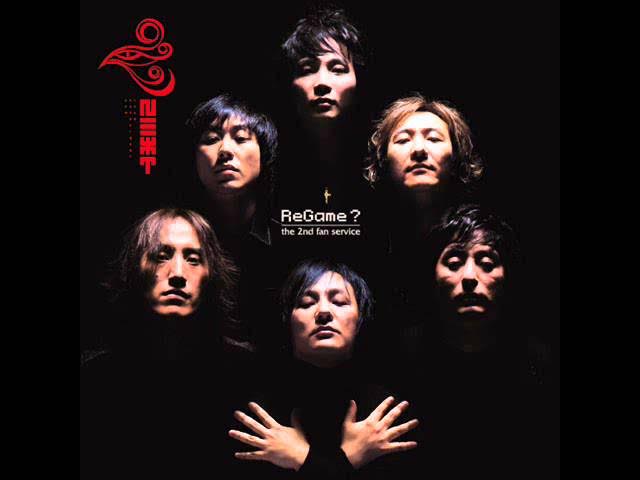
Founded in 1992, N.EX.T represented Shin Hae-chul’s desire to create music without the commercial constraints of the mainstream industry.
Unlike many Korean rock bands of the era, N.EX.T refused to remain within a single genre. Their music blended progressive rock, heavy metal, electronic music, industrial sounds, orchestral arrangements, and experimental production into a style that was both ambitious and uniquely their own.
Lyrically, the band explored subjects rarely addressed in Korean popular music at the time. Rather than focusing primarily on romance, Shin wrote about technology, identity, war, environmental issues, philosophy, and the relationship between humanity and society.
Albums such as The Return of N.EX.T Part I: The Being, The Return of N.EX.T Part II: The World, and Lazenca: A Space Rock Opera demonstrated his belief that popular music could also be intellectually ambitious and artistically uncompromising.
While N.EX.T never achieved the same commercial popularity as Korea’s biggest mainstream pop acts, the band earned enormous respect among musicians and critics. Today, it is widely regarded as one of the most innovative and influential rock bands in Korean music history.
Music as Ideas
For Shin Hae-chul, music was never simply entertainment.
He viewed songs as a medium for asking questions rather than providing easy answers. Whether discussing individual freedom, social conformity, scientific curiosity, or the future of technology, his work consistently encouraged listeners to think critically about the world around them.
This philosophy distinguished him from many of his contemporaries and gradually transformed his public image. Audiences increasingly looked to Shin not only as a musician, but also as an intellectual voice willing to engage with difficult and often controversial subjects.
The Electronic Experiment: No Dance (노댄스)
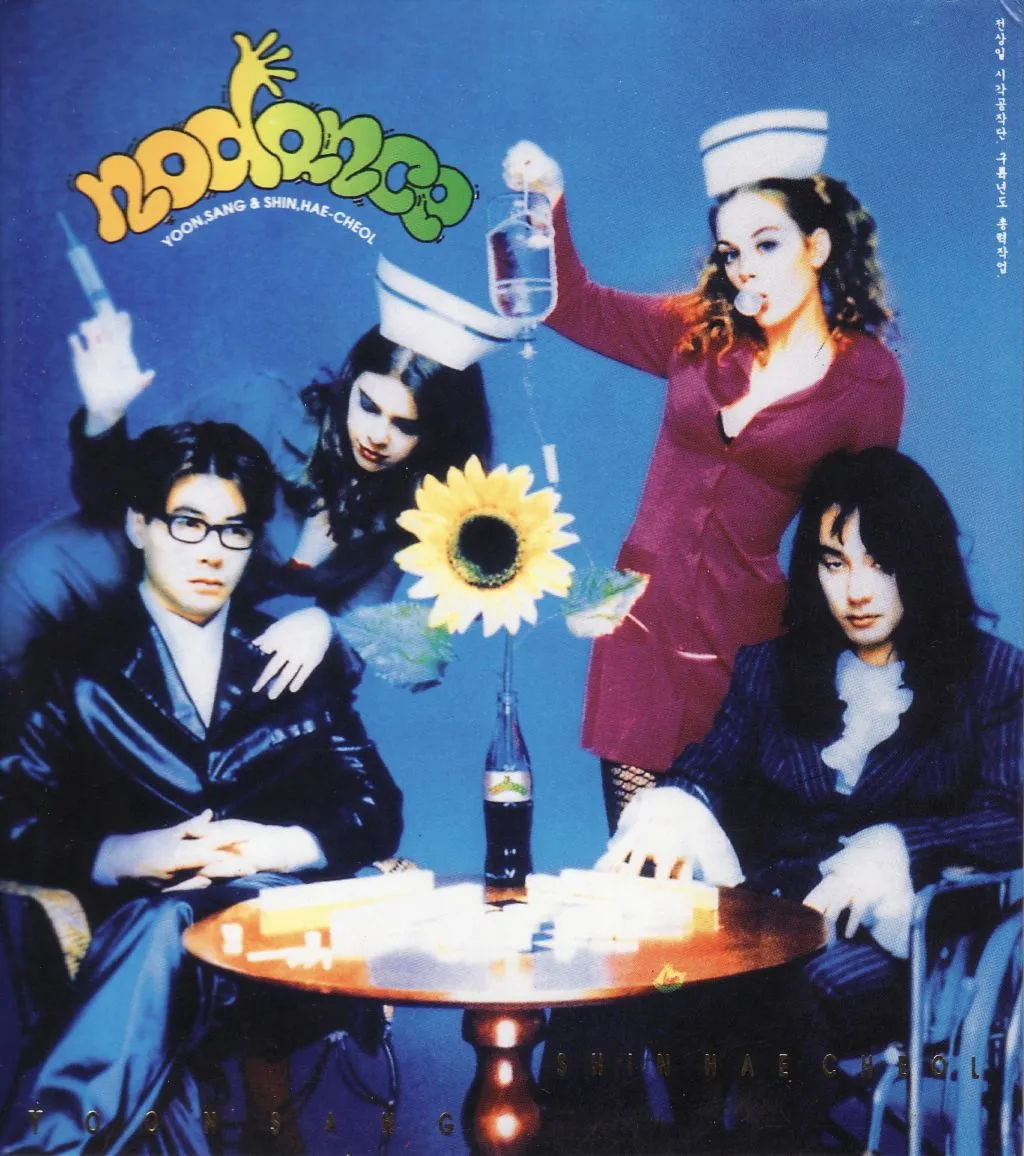
Shin Hae-chul’s artistic curiosity was never limited to a single band or genre.
In 1996, he joined forces with acclaimed singer-songwriter, composer, and producer Yoon Sang, one of the most influential figures in modern Korean popular music, to form the experimental electronic duo No Dance (노댄스). Decades later, Yoon would also become internationally recognized as the father of Anton, a member of the K-pop group RIIZE, introducing his name to a new generation of global audiences.
Challenging the era’s commercial obsession with fast-paced dance music, No Dance embraced ambient soundscapes, sophisticated synthesizer arrangements, and introspective songwriting designed for attentive listening rather than commercial trends.
One of the project’s best-known songs, “Running” (달리기)—composed by Yoon Sang with lyrics by Shin Hae-chul—became a timeless classic, later reimagined into a massive K-pop hit when remade by the iconic girl group S.E.S. in 2002. The collaboration showcased Shin’s remarkable versatility as both a lyricist and creative visionary, demonstrating that electronic pop could offer quiet comfort, emotional depth, and philosophical reflection.
🎥 “Tomorrow Is Too Late” (내일은 늦으리, 1992)
South Korea’s historic 1992 environmental mega-collaboration track, composed and written by Shin Hae-chul and performed by top 90s K-pop icons.
Beyond No Dance, Shin Hae-chul and Yoon Sang also collaborated on the environmental music campaign Tomorrow Is Too Late (내일은 늦으리), one of South Korea’s most significant environmental music projects of the early 1990s. Bringing together many of the country’s leading artists, the campaign reflected Shin’s belief that popular music could also serve social and environmental causes. Their collaboration continued in the 1993 follow-up project, which included the song “The World Turns White” (세상은 하얗게).
Becoming “Mawang”
The nickname “Mawang,” meaning “Demon King,” was originally inspired by Shin Hae-chul’s charismatic stage presence and distinctive appearance.
Over time, however, it came to represent something much deeper.
Unlike many celebrities who avoided controversy, Shin spoke openly about issues ranging from education and freedom of expression to copyright, technology, and civic responsibility. Whether audiences agreed with his views or not, he earned widespread respect for expressing them thoughtfully and consistently.
For many Koreans, “Mawang” became less a stage persona than a symbol of intellectual independence and artistic integrity.
Ghost Station: More Than a Radio Show
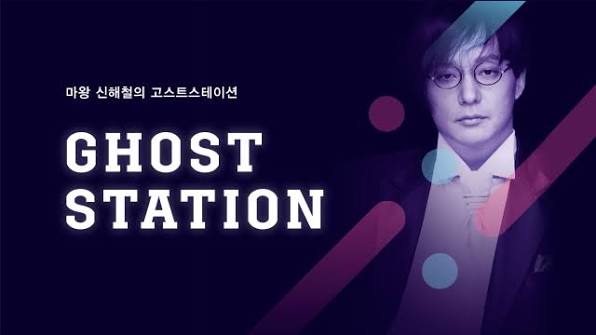
One of the defining chapters of Shin Hae-chul’s career was Ghost Station (고스트 스테이션), his late-night radio program.
Breaking away from the polite, scripted conventions of Korean radio, he adopted an informal, candid, and often satirical style. He spoke to listeners as if they were old friends, moving effortlessly between humor, sharp wit, philosophical reflection, and heartfelt encouragement. The result was a program that felt remarkably honest, deeply personal, and unlike anything else on Korean radio at the time.
The show became an open forum where listeners discussed life, philosophy, social issues, and personal struggles without judgment. Rather than offering easy answers, Shin encouraged his audience to think critically, question assumptions, and find their own paths.
For countless young Koreans navigating academic and societal pressures, Ghost Station became far more than late-night entertainment—it became a sanctuary, a community, and a place where they felt truly heard.
Speaking Without Fear
Shin Hae-chul believed that artists should not isolate themselves from society.
Throughout his career, he participated actively in public discussions on topics including freedom of expression, copyright law, education, digital culture, science, and technological innovation. He defended the importance of independent thinking while encouraging respectful debate, even on issues that divided public opinion.
His willingness to challenge conventions earned him both passionate supporters and outspoken critics. Yet even those who disagreed with him often acknowledged the sincerity and consistency of his convictions.
A Timeless Legacy
Following Shin Hae-chul’s passing in 2014, tributes came from musicians across generations and genres.
Rock bands, pop artists, hip-hop musicians, and even K-pop idols cited him as an inspiration—not only for his musical innovation, but also for his intellectual curiosity and artistic courage.
His songs continue to be rediscovered by new audiences, while N.EX.T remains a benchmark for experimental Korean rock. Meanwhile, Ghost Station is still remembered as one of the most influential radio programs in modern Korean broadcasting.
More than a decade after his passing, Shin Hae-chul’s influence extends well beyond his recordings. His legacy lives on in the countless artists, writers, broadcasters, and listeners who continue to believe that popular culture can challenge ideas, inspire curiosity, and encourage meaningful conversation.
Curator’s Note
Shin Hae-chul changed Korean popular music not simply by writing memorable songs, but by expanding what a musician could represent.
As the visionary behind N.EX.T, he pushed the boundaries of Korean rock through fearless experimentation. As “Mawang,” he encouraged generations of listeners to question assumptions, think independently, and engage with the world beyond entertainment.
His career demonstrates that music can be more than a soundtrack to life—it can be a catalyst for ideas, dialogue, and cultural change.
For that reason, Shin Hae-chul remains not only one of Korea’s greatest musicians, but also one of its most enduring cultural icons.
🎧 Essential Listening Guide: The Sound & Mind of Shin Hae-chul
To truly experience the full scope of Shin Hae-chul’s musical universe—spanning anthemic rock, cutting-edge digital production, and deeply moving lyricism—explore these defining masterpieces:
• “To You” (그대에게) — The grand, synth-driven youth anthem that won the 1988 Campus Music Festival and launched his career.
• “Jazz Café” (재즈 카페) — A sophisticated fusion of pop melodies and early 1990s MIDI sound design.
• “Don’t Look So Sad” (슬픈 표정 하지 말아요) — His beloved solo debut ballad, proving his timeless songwriting sensibility.
• “You’re Deep Inside My Heart” (내 마음 깊은 곳의 너) — An iconic early 90s hit blending emotional depth with modern electronic arrangements.
• “Letter to Myself” (나에게 쓰는 편지) — A deeply introspective masterpiece featuring an iconic spoken-word monologue on identity, passion, and youth.
• “City People” (도시인) — N.EX.T’s sharp, synthesized critique of modern urban isolation and routine.
• “Fly, Chick” (날아라 병아리) — A poetic, philosophical reflection on mortality, innocence, and childhood.
• “The Knight of a Doll” (인형의 기사) — One of N.EX.T’s most tender rock ballads, capturing nostalgic and bittersweet affection.
• “For Couples Fighting Through Hard Times” (힘겨워하는 연인을 위하여) — A deeply moving anthem written to comfort lovers facing societal barriers, demonstrating his profound empathy.
• “Running” (달리기) — No Dance (Shin Hae-chul & Yoon Sang) — A legendary 1996 electronic collaboration with maestro Yoon Sang, delivering a subtle yet deeply comforting message of perseverance.
• “From the Sun to the Boy” (해에게서 소년에게) — A soaring rock track brimming with youthful passion, hope, and determination.
• “Lazenca, Save Us” — An epic symphonic rock triumph featuring massive choral arrangements and heavy guitar riffs.