From Infinite Track to N.EX.T: The Evolution of Korean Rock (1988–1997)
Introduction
Every legendary musician has a beginning.
For Shin Hae-chul, that beginning arrived in 1988—not in a recording studio, but on the stage of Korea’s most prestigious university music competition.
Within just a few years, he would evolve from the frontman of a college band into one of Korea’s most innovative singer-songwriters, helping introduce digital production techniques that would influence the next generation of Korean popular music.
Long before N.EX.T, long before Ghost Station, and long before he became known as the “Mawang” (Demon King), Shin Hae-chul was already redefining what Korean pop music could sound like.
The Song That Introduced a New Generation
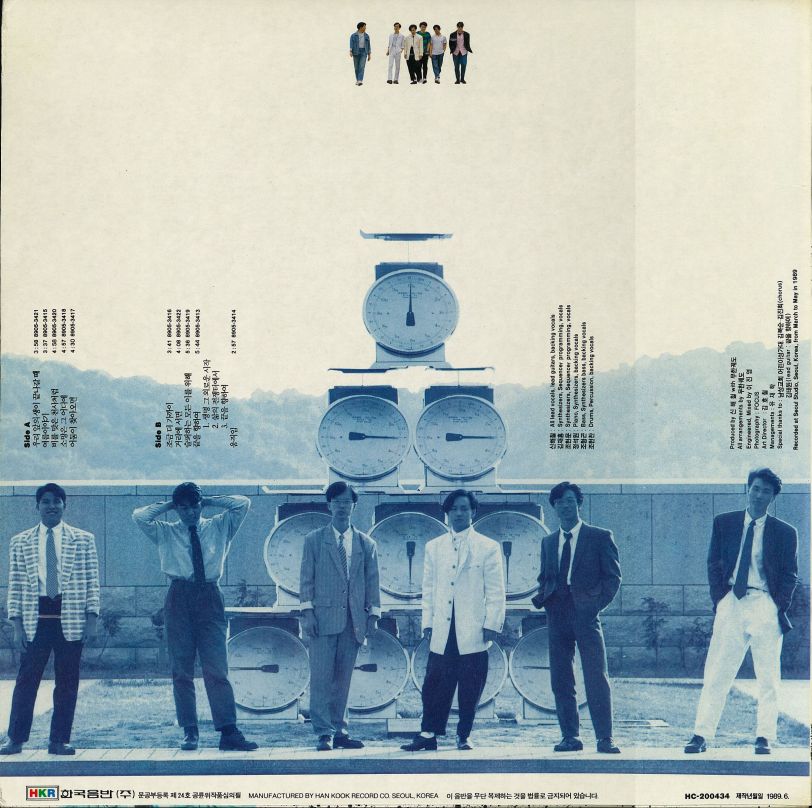
In 1988, Shin Hae-chul led Infinite Track (무한궤도) to victory at the MBC Campus Music Festival, one of South Korea’s most influential launching pads for young musicians.
Their winning song, “To You” (그대에게), immediately distinguished itself from many contemporary festival entries. Rather than relying solely on acoustic arrangements and sentimental ballad traditions, the song embraced bold synthesizers, dynamic brass sections, and an anthemic sense of optimism.
More than three decades later, “To You” remains one of the defining youth anthems in Korean popular music.
The End of Infinite Track
Despite its immediate success, Infinite Track was never intended to become a long-term commercial band.
Following the festival, its members gradually pursued different careers, and Shin Hae-chul found himself standing at an unexpected crossroads.
Instead of joining an established entertainment company as a conventional singer, he chose to write, compose, and produce his own music. That decision would define the rest of his career.
Reinventing Himself as a Solo Artist
🎥 Shin Hae-chul (신해철) – “Jazz Café” (재즈카페) Live @ SBS Inkigayo (1991.12.22)
Shin Hae-chul’s first solo albums surprised audiences. Listeners who expected another campus-rock vocalist instead discovered an artist fascinated by technology, arrangement, and sound design.
Songs such as “Jazz Café”, “Don’t Look So Sad” (슬픈 표정 하지 말아요), and “Deep Inside My Heart” (내 마음 깊은 곳의 너) demonstrated his ability to combine memorable melodies with increasingly sophisticated production.
Unlike many Korean singers of the era, Shin viewed the recording studio as a creative instrument rather than simply a place to capture performances.
Bringing Digital Production into Korean Pop
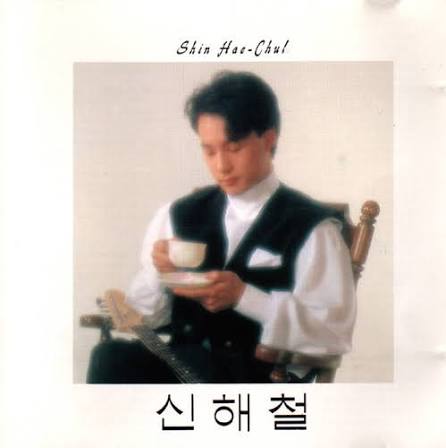
The late 1980s and early 1990s marked the rapid spread of MIDI sequencing, synthesizers, and digital recording technologies throughout the global music industry.
Shin Hae-chul quickly embraced these new tools. Rather than treating technology as a novelty, he integrated electronic instrumentation into emotionally driven pop songs, creating arrangements that sounded both modern and distinctly his own.
His work helped demonstrate that Korean popular music could absorb emerging production techniques while maintaining its emotional identity.
Success Was Never Enough
By the early 1990s, Shin Hae-chul had become one of Korea’s most successful young singer-songwriters. Commercially, he had every reason to continue making polished pop music.
Artistically, however, he was becoming increasingly restless. The questions he wanted to ask—and the music he wanted to create—could no longer fit comfortably within the boundaries of mainstream pop.
Rather than repeating a successful formula, Shin chose uncertainty over comfort. It was a decision that would soon lead to the birth of N.EX.T, one of the most influential rock bands in Korean music history.
Curator’s Note
Many artists spend their early careers searching for their identity. Shin Hae-chul found his—and then refused to remain there.
His years between Infinite Track and N.EX.T reveal an artist who was already looking beyond commercial success, experimenting with new technologies, new musical languages, and new ways of expressing ideas.
Those years were not simply the beginning of his career. They were the foundation of everything that followed.
Series Overview & Upcoming Chapters
Shin Hae-chul: The Philosopher, Innovator, and Cultural Iconoclast Who Changed Korean Popular Music