When the State Scripted the Final Track: Censorship and South Korean Pop Records in the 1980s
Today’s South Korean music scene thrives on unmatched creative license and boundary-pushing concepts. Yet decades ago, the production pipeline operated under rigid bureaucratic oversight. Tracks faced pre-release scrubbing, lyrics were heavily modified, and commercial records routinely concluded with state-mandated additions that completely clashed with an artist’s original vision.
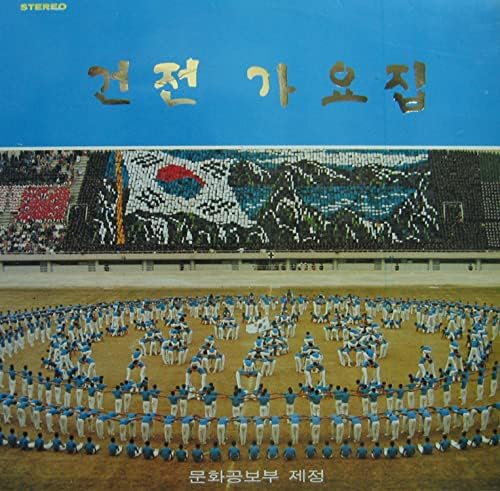
These mandatory tracks were known as Geonjeon Gayo (건전가요)—literally translated as “wholesome songs.” Finding an upbeat patriotic hymn or children’s tune at the tail end of an emotionally heavy rock LP or intimate ballad record offers a jarring look into a bygone era.
Mandatory Conformity in Sound
Official initiatives promoting state-sanctioned morality had long roots in South Korea, but the rule became inescapable following the 1979 album-inclusion requirement. Every new pop release had to house an approved “healthy song” on its tracklist. This policy turned albums into ideological hybrids where an artist’s personal artistic narrative was abruptly overridden by government messaging.
Vinyl Artifacts of a Controlled Era
Physical records from the decade preserve this strange historical mandate vividly:
- Yoo Jae-ha’s Because I Love You (1987): A masterpiece of modern Korean pop that originally closed with the state-assigned track “Song of Purification.”
- Lee Moon-sae’s Vol. 4 (1987): Featured signature ballad work abruptly paired with “Eoheoya Dunggi Dunggi.”
- Byun Jin-sub’s Debut (1988): Wrapped up his landmark release with the traditional children’s tune “The Orchard Road.”
The Shadow of Prohibited Music
While wholesome tracks dictated what must be heard, the parallel censorship apparatus determined what must be silenced. Sweeping 1975 regulations empowered authorities to ban songs under vague criteria regarding national security, public decency, and social disruption. Because boundaries were intentionally kept ambiguous, creators constantly lived on edge.
Consider Kim Min-ki’s “Morning Dew” (아침 이슬). Written without overt political motives, the track organically transformed into an anthem for pro-democracy activists. Its eventual ban demonstrated a core reality of cultural suppression: authorities do not just police original intent; they attempt to crush the organic meanings audiences assign to art.
Cracks in the System: 1987 and Beyond
The June Democratic Struggle of 1987 triggered a gradual loosening of state controls. Months after the protests, hundreds of previously banned tracks were re-evaluated and officially cleared. However, institutional habits died hard; compulsory wholesome tracks lingered on some releases through 1988 before quietly disappearing as the decade closed.
Crucially, the hurdle of pre-release record review remained intact. Musician Jung Tae-chun took a courageous stand in 1990 by refusing administrative censorship on his album Ah, Korea. His legal battles paved the way for broader structural reforms.
1996: Dismantling Prior Censorship
By the mid-1990s, a vibrant wave of alternative genres, hip-hop, and youth-driven media was reshaping South Korea’s cultural footprint. Legal milestones arrived in 1996, when the Constitutional Court struck down mandatory pre-release album screening and film pre-censorship systems.
This historic shift freed creators from administrative oversight, laying vital groundwork for the unprecedented global cultural boom that followed in the subsequent decades.
🎥 Kim Min-ki - “Morning Dew” (아침 이슬) — Gyeore-ui Norae Concert (August 18, 1990)
🎥 Han Dae-soo - “To the Land of Happiness” (행복의 나라로) — Lee Sora’s Proposal (KBS, Oct 25, 1997)