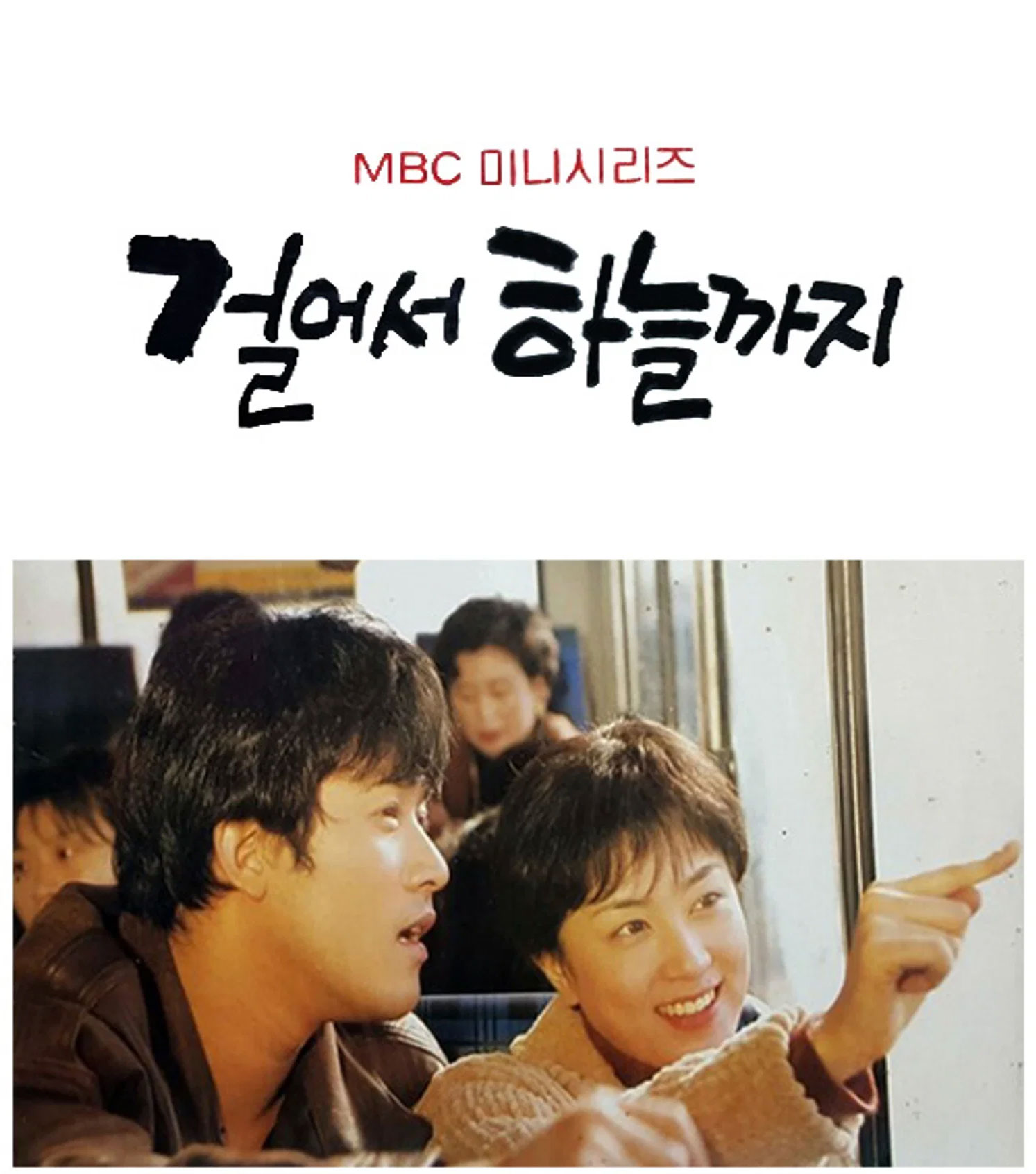
Airing on MBC from January to March 1993, Walking to Heaven (걸어서 하늘까지) captured the rugged, rebellious spirit of early-1990s Korean television. Moving away from the lighter tone of many campus and romantic dramas of the era, the 16-episode series drew audiences with its emotionally charged story of love, betrayal, and survival on the margins of society.
The drama is remembered not only for the compelling performances of Choi Min-soo, Kim Hye-sun, and Son Ji-chang, but also for its powerful rock-driven soundtrack and Kim Hye-sun’s striking pixie-cut transformation, which became one of the most recognizable beauty trends of 1993.
Post Highlights
A Landmark for Rock-Driven Drama OSTs
Helped popularize guitar-driven rock music in Korean television soundtracks during the early 1990s.
Golden Cup-Winning Theme Song
Jang Hyun-chul’s “Walking to Heaven” earned a Golden Cup on KBS’s Gayo Top 10 after remaining No. 1 for five consecutive weeks.
Fashion & Hair Trendsetter
Kim Hye-sun’s dramatic transformation into a short-haired heroine attracted widespread attention, making her pixie cut one of South Korea’s defining beauty trends of 1993.
The Tough-Guy Antihero
Further established Choi Min-soo as one of the defining charismatic and rebellious male stars of 1990s Korean television.
Key Information
| Category | Details |
|---|---|
| Drama Title | Walking to Heaven (걸어서 하늘까지) |
| Broadcast Period | January 18, 1993 – March 9, 1993 (16 Episodes) |
| Network | MBC |
| Main Cast | Choi Min-soo, Kim Hye-sun, Son Ji-chang |
| Director / Writer | Park Chul (박철) / Choi Yeon-ji (최연지) |
| Notable Track | “Walking to Heaven (걸어서 하늘까지)” – Jang Hyun-chul |
Drama Synopsis & Cultural Impact
Set against a dark, gritty urban backdrop, Walking to Heaven follows Mool-sae (also known as Ji-song), a rebellious thief haunted by a painful past, and Ji-sook, an energetic aerobics instructor striving to build an honest life despite her difficult background.
Their tragic love story contrasted sharply with the brighter campus dramas popular during the same period, captivating audiences through its emotional intensity, urban realism, and unforgettable performances.
Kim Hye-sun’s Iconic Pixie Cut
Before this drama, Kim Hye-sun was widely recognized for her sweet, long-haired image as one of Korea’s most popular young actresses.
For her role as the independent and spirited Ji-sook, she underwent a dramatic transformation by cutting her hair into a stylish, boyish pixie cut.
At a time when long, softly curled hairstyles dominated Korean television, Kim’s sharply cropped look stood out as a refreshing departure from conventional beauty standards. The hairstyle perfectly complemented Ji-sook’s energetic and resilient personality while emphasizing the actress’s distinctive facial features.
The look quickly gained widespread attention, with beauty salons reportedly receiving numerous requests for the “Kim Hye-sun Short Cut.” It became one of the defining Korean beauty trends of 1993 and remains one of the actress’s most iconic screen images.
Choi Min-soo & Son Ji-chang’s Star Power
Choi Min-soo
Choi Min-soo delivered a magnetic performance as the rugged and charismatic Mool-sae. The role further cemented the tough, charismatic screen persona that would later define his acclaimed performance in Sandglass (1995), helping establish him as one of Korean television’s signature antiheroes of the 1990s.
Son Ji-chang
Meanwhile, Son Ji-chang brought emotional balance to the story as Goo Yeon-soo. His performance added depth to the central love triangle and further strengthened the drama’s appeal among younger audiences.
Why the Soundtrack Matters
“Walking to Heaven” (MBC, 1993) Main Theme
Jang Hyun-chul’s Explosive Rock Theme
The centerpiece of the soundtrack was its title song, “Walking to Heaven” (걸어서 하늘까지), performed by then-rising singer Jang Hyun-chul.
Driven by soaring electric guitar riffs and Jang’s raspy, high-energy vocals, the song captured the desperation, passion, and emotional turbulence of the drama’s protagonists.
The theme became a major hit beyond the television series itself, earning a Golden Cup on KBS’s Gayo Top 10 after remaining No. 1 for five consecutive weeks.
Guitars, Rock, and 1990s Rebellion
Composed by Choi Kyu-sung, who also performed the song’s memorable guitar solos, the track introduced a heavier rock sound to mainstream Korean television.
Rather than relying on orchestral melodies or sentimental ballads, the soundtrack demonstrated that rock music could effectively complement dramatic storytelling and broaden the musical palette of Korean drama OSTs.
Its powerful guitar arrangements and emotionally charged vocals perfectly matched the drama’s themes of rebellion, hardship, and tragic romance.
Legacy
More than three decades after its original broadcast, Walking to Heaven remains a memorable landmark in Korean popular culture.
Kim Hye-sun’s pixie cut became one of the defining television hairstyles of 1993, while Choi Min-soo’s performance further established the tough, emotionally wounded antihero who would become one of the defining male archetypes of 1990s Korean drama.
At the same time, Jang Hyun-chul’s title song demonstrated that a rock-driven soundtrack could achieve mainstream popularity while becoming inseparable from a television drama’s identity.
Today, Walking to Heaven is remembered not only for its memorable performances and fashion influence but also as one of the defining examples of how music, style, and television storytelling converged in early-1990s Korean popular culture.