Long before Korean drama soundtracks became an international phenomenon, television music was already becoming an important part of the viewing experience in Korea.
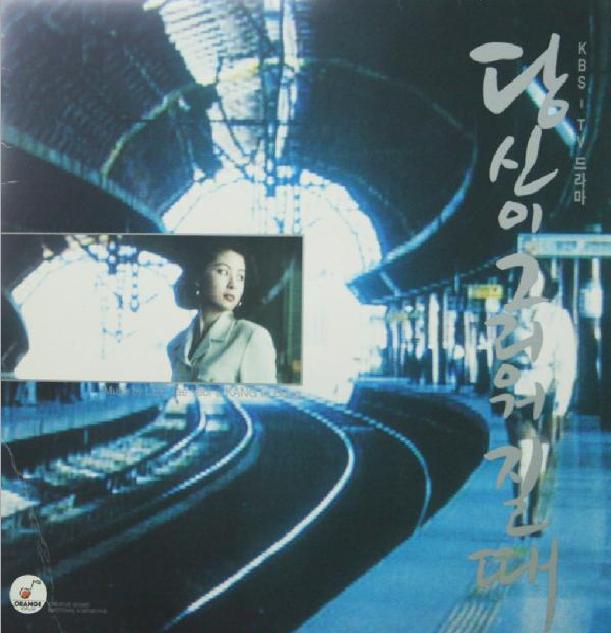
One fascinating example is the soundtrack to the KBS daily drama When I Miss You (당신이 그리워질 때).
The series began airing on KBS 1TV in September 1993, and its soundtrack was released the same year. Built around a mixture of vocal songs and instrumental themes, the album captures an era when Korean television soundtracks were beginning to develop identities that extended beyond the programs themselves.
At its center was the memorable title song “When I Miss You,” performed as a duet by Kim Seung-gi (김승기) and Lee Mi-ki (이미키).
Post Highlights
More Than a Single Theme Song
The 11-track soundtrack included a main title song alongside multiple love themes, character music, and instrumental pieces.
A Memorable Vocal Duet
Kim Seung-gi and Lee Mi-ki’s “When I Miss You” became closely associated with the drama and was performed on KBS’s popular music program Gayo Top 10.
A Snapshot of Early-1990s Drama Music
The album offers a useful look at Korean television music before the large-scale OST industry that would emerge in later decades.
Key Information
| Category | Details |
|---|---|
| Drama Title | When I Miss You (당신이 그리워질 때) |
| Broadcast Network | KBS 1TV |
| Broadcast Period | September 13, 1993 – December 30, 1994 |
| Format | Daily Drama |
| OST Release Year | 1993 |
| OST Format | Original Television Soundtrack |
| Number of Tracks | 11 |
| Running Time | 36:25 |
| Key Vocalists | Kim Seung-gi · Lee Mi-ki · Kim Jeong-seon · Kim Hyeong-seop |
| Main Theme | “When I Miss You” (당신이 그리워질 때) |
| Main Theme Credits | Lyrics by Kim Seung-gi · Music by Lee Tae-yeol |
More Than a Television Theme
The soundtrack of When I Miss You is interesting not because it invented the Korean drama OST, but because of the way it was structured.
Rather than consisting only of a recognizable opening song accompanied by incidental background music, the commercially released album presented 11 separate tracks with clearly defined functions.
Titles included “Love Theme I,” “Love Theme II,” “Love Theme III,” and “Shinhee’s Theme,” alongside several vocal and instrumental pieces.
That structure gives the album a sense of musical continuity.
Listeners could encounter the music within the drama and then experience it again as a standalone album—a model that would become increasingly familiar as Korean television soundtrack culture developed.
The Main Theme: “When I Miss You”
At the center of the soundtrack is “When I Miss You” (당신이 그리워질 때).
The song was written by Kim Seung-gi, composed by Lee Tae-yeol, and performed by Kim Seung-gi and Lee Mi-ki.
Their contrasting voices gave the song the character of a conversation rather than a conventional solo drama theme.
The song also traveled beyond the drama itself.
Kim Seung-gi and Lee Mi-ki performed it on KBS’s Gayo Top 10 in December 1993, placing a television drama theme directly within one of Korea’s major popular-music programs of the period.
🎥 Kim Seung-gi & Lee Mi-ki – “When I Miss You” KBS Gayo Top 10 (1993)
A live television performance of the drama’s main title song by its original vocalists.
Inside the Soundtrack
The original soundtrack contains 11 tracks divided across what was originally the two sides of the physical release.
Several titles explicitly identify their dramatic function.
| Track | Performer | Role in the OST |
|---|---|---|
| When I Miss You (당신이 그리워질 때) | Kim Seung-gi & Lee Mi-ki | Main Title Song |
| Coffee While Drinking (커피를 마시며) | Lee Tae-yeol | Love Theme I |
| Another Beginning (또 다른 시작) | Lee Mi-ki | Vocal track |
| Your Scent Scattered in the Wind (바람속에 흩어지는 그대 향기) | Lee Tae-yeol | Main Title |
| Small Traces (작은 흔적) | Lee Tae-yeol | Instrumental / soundtrack piece |
| Me Beside You (그대 곁에 있는 나) | Kim Jeong-seon | Shinhee’s Theme |
| Longing Reflected in the Mirror (거울속에 비친 그리움) | Lee Tae-yeol | Main Title |
| Toward You (그대를 향해) | Kim Hyeong-seop | Vocal track |
| As If Dreaming (꿈을 꾸듯이) | Lee Tae-yeol | Soundtrack piece |
| Sweet Tears (달콤한 눈물) | Lee Tae-yeol | Love Theme II |
| Fluttering Night (설레이는 밤) | Lee Tae-yeol | Love Theme III |
This naming system is particularly revealing.
The album was not marketed simply around one popular theme song. Its track list preserved different emotional functions within the drama, including romantic themes and music associated with an individual character.
Lee Tae-yeol and the Sound of the Drama
Another aspect of the album deserves attention: Lee Tae-yeol (이태열).
He composed the main title song and appears throughout the soundtrack as a performer on several of its instrumental pieces, including “Coffee While Drinking,” “Small Traces,” and “Fluttering Night.”
This gives the album a degree of musical continuity that is easy to miss when attention is focused only on the famous duet.
The title song may be its most recognizable recording, but the complete album reveals a broader musical framework created for the drama.
A Moment in the Evolution of Korean Drama OSTs
When I Miss You arrived during an interesting period in Korean television music.
By the early 1990s, drama music was becoming increasingly visible outside the programs themselves. Soundtrack albums allowed viewers to revisit songs and instrumental themes independently from the broadcasts in which they first appeared.
The 1993 When I Miss You soundtrack belongs to this period.
Its combination of a recognizable vocal title song, additional vocal performances, character-related music, and multiple numbered love themes illustrates how television music could function both inside a drama and as a separate recorded album.
This was still years before Korean dramas—and their soundtracks—would become major components of the Korean Wave.
Seen from today, the album provides a snapshot of what Korean television soundtrack culture looked like before that transformation.
An Unexpected Connection: Kim Seung-gi and “HAM”
For Korean viewers in 1993, Kim Seung-gi was not an entirely unfamiliar voice.
A year earlier, his song “HAM” (햄) had been featured in a memorable 1992 Maxwell Coffee Mix commercial.
The advertisement became associated with actress Yoo Ho-jeong and its melancholic narration, while Kim Seung-gi’s song played underneath.
As a result, some viewers encountering his voice in When I Miss You may already have heard him through one of the period’s memorable television commercials.
It is a small connection, but one that captures how Korean popular music circulated in the early 1990s—not only through albums and music programs, but through dramas and advertising as well.
🎥 Maxwell Coffee Mix Commercial featuring Kim Seung-gi’s “HAM” (1992)
Curator’s Note
Today, the soundtrack of When I Miss You is easy to overlook.
It arrived before Korean drama OSTs became a highly visible part of the music industry, and decades before streaming platforms introduced Korean television music to audiences around the world.
That is precisely what makes the album interesting.
Its 11 tracks preserve a particular moment in Korean television history: a title song that moved from a daily drama to Gayo Top 10, vocal performances sharing an album with character and love themes, and music designed to remain recognizable beyond individual scenes.
Rather than calling When I Miss You the beginning of the modern K-drama OST, it is more accurate—and more interesting—to see it as part of the period in which Korean television music was becoming increasingly visible as recorded music in its own right.
For listeners exploring the history behind today’s K-drama soundtrack culture, it is a small but revealing piece of that story.