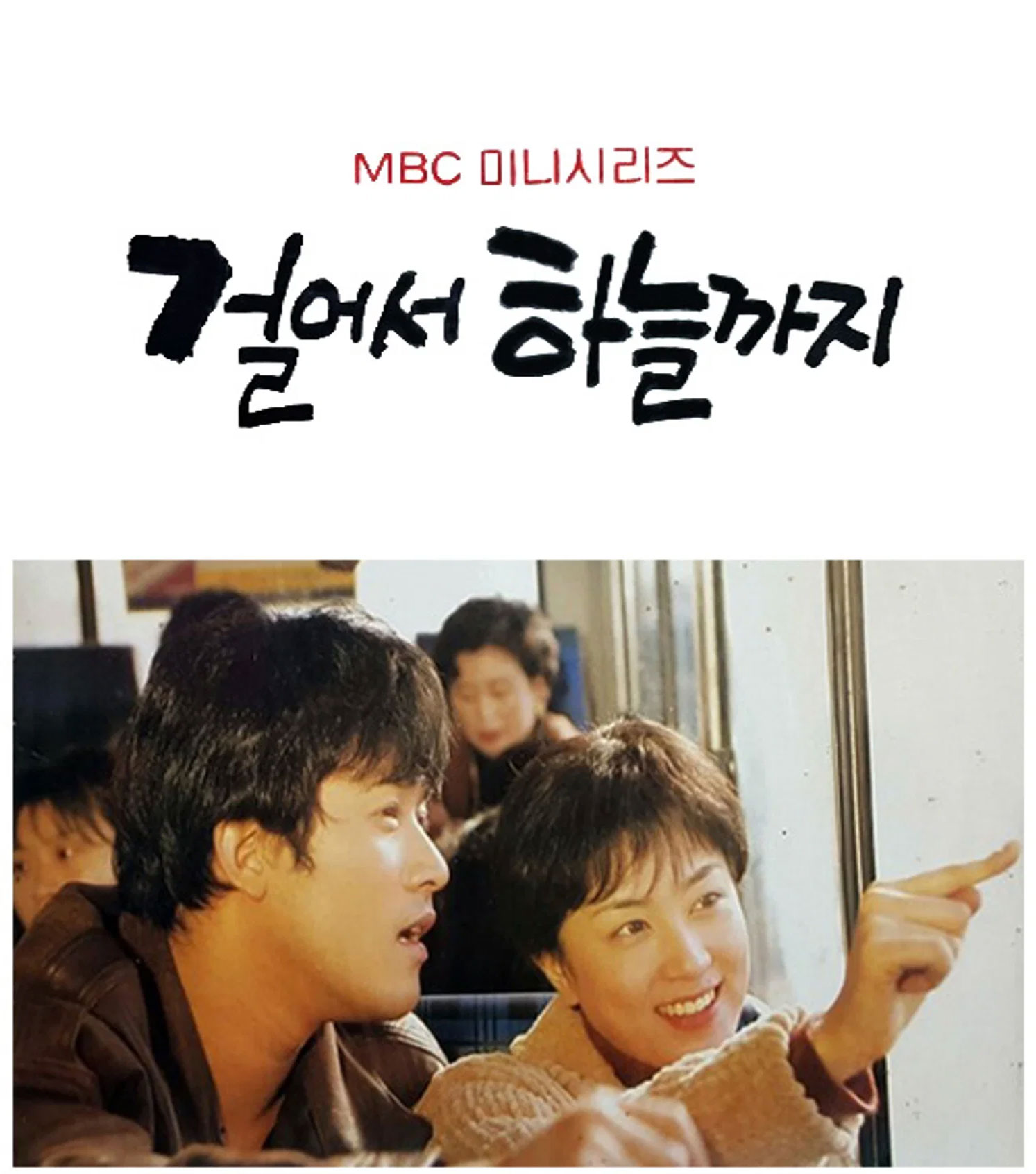
If Jealousy helped establish the modern Korean romantic drama, Pilot (1993) demonstrated that television could also inspire career aspirations on a national scale. With a peak viewership rating of 46.2%, the MBC miniseries sparked widespread interest in aviation and became one of the defining Korean dramas of the early 1990s.
Main Characters
Kang Min-ki (Choi Soo-jong)
A passionate and compassionate aviation cadet whose determination helps him overcome repeated technical setbacks and emotional challenges.
Park Sang-min (Han Suk-kyu)
A calm, highly disciplined perfectionist who serves as both Min-ki’s closest friend and his greatest professional rival.
Noh Hye-ran (Chae Shi-ra)
A confident and capable flight attendant whose presence creates a complex emotional dynamic between the two aspiring pilots.
Plot and Key Themes
High-Stakes Rivalry and Personal Conflict
Although Min-ki and Sang-min begin as close friends pursuing the same dream, professional competition and their mutual feelings for Hye-ran gradually place their friendship under increasing strain. The story is further enriched by Do Jin-sook (Eum Jung-hee), whose unrequited love for Min-ki adds another layer of emotional complexity typical of many Korean dramas of the era.
Overcoming Flight Trauma
One of the drama’s defining storylines unfolds during intensive flight training. After surviving a life-threatening emergency in the air, Min-ki develops a debilitating fear of flying that threatens to end his career before it truly begins. His journey to overcome this psychological trauma—while navigating fierce professional rivalry and eventual reconciliation with Sang-min—provides the emotional heart of the series.
Groundbreaking Production Realism
Supported extensively by Korean Air, Pilot was among the earliest Korean television dramas to portray commercial aviation with an exceptional level of realism. The production featured authentic aircraft, real cockpits, professional flight simulators, and airport facilities, while also filming at an aviation training center in Australia.
This commitment to authenticity contributed significantly to growing public interest in aviation careers during the 1990s and helped inspire many young viewers to consider becoming airline pilots.
The Soundtrack: Jung Yeon-jun – Pilot
[MV] Pilot - Pilot OST (1993) Sung by Jung Yeon-jun
The drama’s signature theme, “Pilot,” was performed by Jung Yeon-jun, who would later found the influential Korean R&B group UPTOWN.
Built around soaring synthesizers, energetic drum programming, and an anthemic chorus, the song perfectly complements the drama’s themes of youth, determination, and limitless possibility. Its opening synthesizer motif evokes the sensation of an aircraft accelerating down a runway before takeoff, immediately establishing the series’ aviation identity.
Unlike many television theme songs of the early 1990s that focused primarily on romance or heartbreak, “Pilot” celebrated ambition itself. Its optimistic tone distinguished it from many contemporary drama soundtracks, reinforcing the series’ message that dreams are achieved through perseverance and courage. Rather than dwelling on melancholy, the lyrics emphasize leaving uncertainty behind, embracing new opportunities, and moving confidently toward the future.
Legacy and the Rise of 1990s Youth Dramas
More than three decades after its original broadcast, Pilot remains one of the defining Korean television dramas of the 1990s. Its compelling storytelling, authentic aviation setting, and memorable soundtrack continue to evoke nostalgia for audiences who experienced one of the most transformative decades in modern Korean popular culture.
Today, the series is remembered not only as a successful television drama but also as a cultural document reflecting the aspirations and optimism of South Korea’s rapidly changing society during the early 1990s.
Pilot was not an isolated success. Throughout the mid-1990s, Korean television produced a succession of youth-oriented dramas that combined romance, personal ambition, and memorable music while reflecting the hopes of a rapidly changing generation.
Among the most influential were The Final Match (1994), which ignited a nationwide basketball craze through its portrayal of friendship, rivalry, and youthful determination, and Feelings (1994), a campus drama starring The Blue members Son Ji-chang and Kim Min-jong, whose soundtrack became one of the defining musical memories of the decade.
Together, these dramas captured the optimism, energy, and aspirations of Korean youth during the 1990s. Although each explored different professions and life experiences, they shared a common vision of friendship, ambition, and hope—qualities that continue to resonate with audiences decades later and remain an important part of Korea’s television heritage.