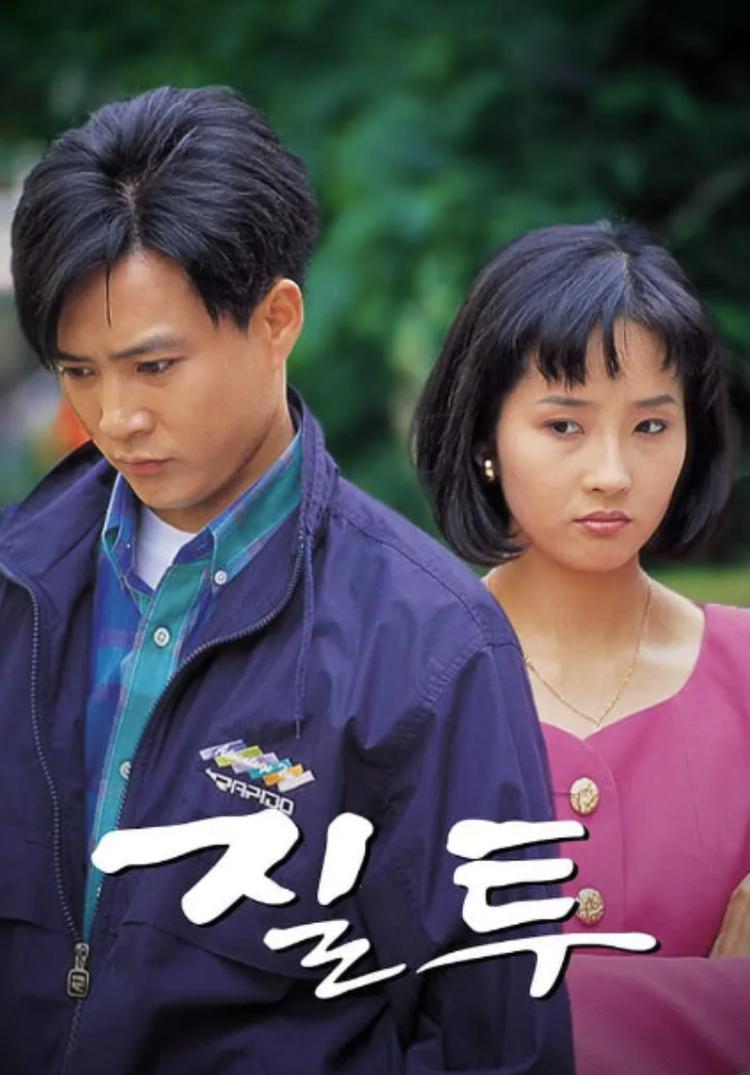
When people discuss the origins of modern Korean dramas, one title appears again and again: Jealousy (질투).
Premiering on MBC in 1992, the series introduced a new style of television romance that felt contemporary, relatable, and unmistakably urban. At the same time, its memorable soundtrack demonstrated how music could become an essential part of emotional storytelling—laying important groundwork for what would eventually become one of Korea’s most influential cultural exports: the K-drama OST.
A New Kind of Korean Drama
Before the early 1990s, Korean television dramas largely revolved around family conflicts, historical narratives, and stories of hardship. Romance certainly existed, but it was rarely the primary focus.
Jealousy changed that.
The drama followed young professionals navigating careers, friendships, and complicated relationships in modern Seoul. Rather than relying on dramatic revenge plots or family feuds, it explored everyday emotions—uncertainty, attraction, insecurity, and, as the title suggests, jealousy.
Its realism resonated with younger audiences and offered a fresh alternative to traditional television storytelling.
The Birth of the Trendy Drama
Today, the term “trendy drama” (트렌디 드라마) is familiar to every Korean drama fan.
In 1992, however, the concept was still new.
Jealousy became one of the earliest dramas to establish many elements that would later define Korean romance series:
- Young urban professionals
- Contemporary fashion and hairstyles
- Cafés, offices, and modern city life
- Realistic dating relationships
- Love triangles
- Character-driven emotional storytelling
These characteristics later became hallmarks of Korean romantic dramas throughout the 1990s and early 2000s.
Many television historians therefore regard Jealousy as one of the pioneers of Korea’s trendy drama era.
A Cast That Defined a Generation
The drama starred some of the biggest names in Korean television:
- Choi Jin-sil
- Choi Soo-jong
- Lee Eung-kyung
- Lee Deok-hwa
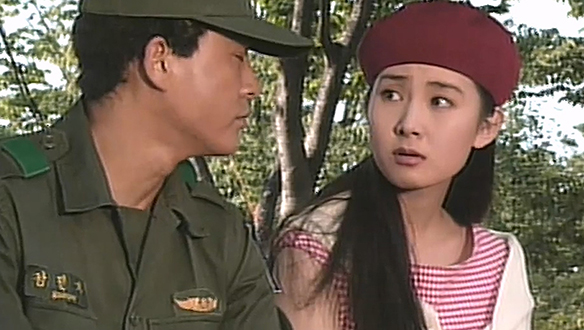
Among them, Choi Jin-sil’s portrayal of Yoo Ha-kyung became especially memorable.
Rather than presenting an idealized heroine, she portrayed a young woman who felt natural, vulnerable, and relatable.
Her performance helped redefine the image of the modern Korean female lead and became one of the defining roles of her career.
Music Became Part of the Story
One of Jealousy’s greatest legacies lies in its music.
Before the early 1990s, Korean television dramas relied primarily on orchestral background scores composed specifically for each production. Theme songs existed, but they were rarely discussed as an important part of the viewing experience.
Jealousy helped change that.
Its music became emotionally inseparable from the drama itself.
Instead of simply accompanying scenes, the theme song reinforced the emotions of the characters and remained in viewers’ memories long after each episode ended.
It was an early example of music becoming part of a drama’s identity.
Yoo Seung-beom’s “Jealousy”
The drama’s iconic opening theme, “Jealousy” (질투), was performed by singer Yoo Seung-beom.
According to Yoo Seung-beom, he recorded the song early in his career after being encouraged to audition for a company specializing in drama music. What began as a recording session for a television soundtrack unexpectedly became the song that introduced him to the Korean public.
Built around a gentle melody and heartfelt vocals, the song perfectly captured the uncertainty of friendship gradually turning into love—the central theme of the drama.
For many Korean viewers, hearing its opening line immediately recalls Jealousy.
More than three decades later, the song remains one of the classic television themes of the early 1990s and is still remembered as one of Korea’s landmark drama songs.
Before the OST Album Era
Modern K-drama fans are familiar with soundtrack albums featuring dozens of songs by multiple artists.
That system barely existed in 1992.
Dedicated OST albums had not yet become major commercial products. Instead, viewers developed emotional attachments to individual songs associated with specific dramas.
Jealousy belongs to this transitional period.
Its success demonstrated that audiences wanted to revisit a drama through its music—a concept that would eventually evolve into Korea’s thriving OST industry.
Only a few years later, dramas such as Star in My Heart (1997) would transform soundtrack albums into best-selling releases and establish the modern OST market.
Why Jealousy Still Matters
Compared with today’s cinematic K-dramas, Jealousy may appear simple. Its pacing is slower, its production is modest, and its romance is understated.
Yet many conventions now associated with Korean romantic dramas can be traced back to this series.
The same is true of its music.
While Jealousy did not create Korea’s commercial OST industry overnight, it demonstrated how a single song could become inseparable from a television drama.
That idea would eventually become one of the defining characteristics of Korean entertainment.
Legacy
Jealousy occupies a unique place in Korean television history.
It helped popularize the trendy drama, introduced a more contemporary style of romance, and demonstrated how music could deepen emotional storytelling.
Later classics—including Star in My Heart, Autumn in My Heart, Winter Sonata, Secret Garden, and Goblin—would elevate Korean drama soundtracks into a global phenomenon.
But every movement has a beginning.
For the history of modern Korean romance—and for the evolution of the K-drama OST—that beginning often leads back to Jealousy.
Quick Facts
| Category | Information |
|---|---|
| Korean Title | 질투 |
| English Title | Jealousy |
| Year | 1992 |
| Network | MBC |
| Episodes | 16 |
| Main Cast | Choi Jin-sil, Choi Soo-jong, Lee Eung-kyung, Lee Deok-hwa |
| Opening Theme | “Jealousy” – Yoo Seung-beom |
| Final Rating | 56.1% |
| Historical Significance | One of Korea’s earliest trendy dramas and an important milestone in the evolution of K-drama OSTs. |