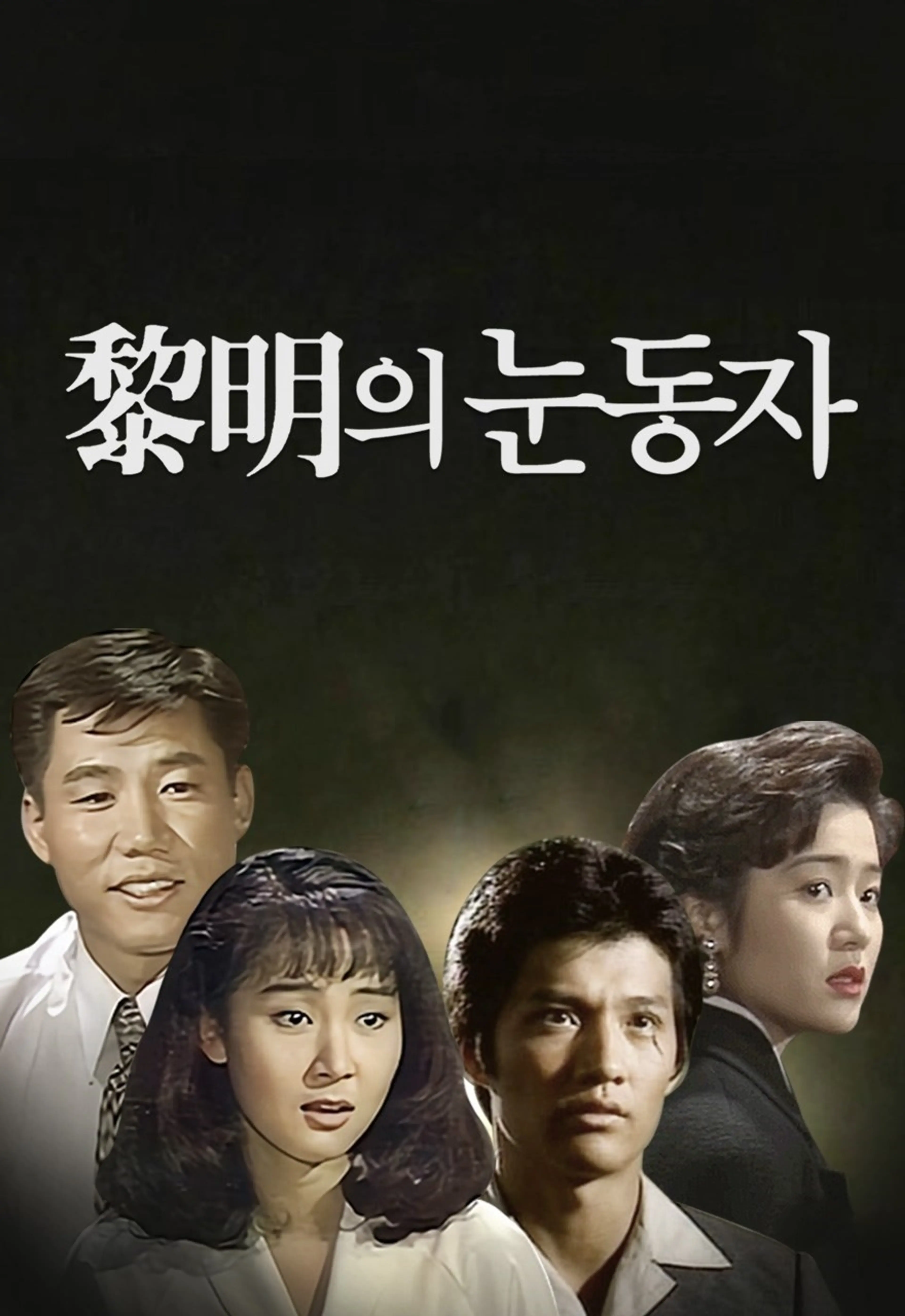
The 1991 MBC historical drama Eyes of Dawn (여명의 눈동자) marked a turning point in the history of Korean television music. Before its release, most Korean drama soundtracks relied heavily on reused background music or a single title theme.
Eyes of Dawn helped redefine the role of television music by introducing one of Korea’s earliest large-scale original symphonic drama soundtracks, establishing a new benchmark for future K-drama music.
Although the term “OST” (Original Soundtrack) would become widely popular years later, Eyes of Dawn demonstrated that a drama soundtrack could stand as an artistic work in its own right rather than simply serving as background accompaniment.
Post Highlights
Historic Milestone: Widely regarded as one of the pioneering Korean television productions to feature a large-scale original symphonic soundtrack album.
Mastermind Composer: Original score composed by legendary composer and music director Choi Kyung-shik (최경식).
Cultural Impact: Its soaring main theme became one of the most recognizable melodies in Korean television history.
Epic Storytelling: The orchestral score heightened the emotional weight of Korea’s turbulent modern history, spanning the Japanese occupation, World War II, liberation, and the Korean War.
Key Information
| Category | Details |
|---|---|
| Drama Title | Eyes of Dawn (여명의 눈동자) |
| Broadcast Period | October 16, 1991 – February 6, 1992 (36 Episodes) |
| Network | MBC |
| Main Cast | Choi Jae-sung, Chae Shi-ra, Park Sang-won |
| Director / Writer | Kim Jong-hak / Song Ji-na |
| Music Director | Choi Kyung-shik (최경식) |
| Notable Tracks | “Main Theme (Main Title)”, “Yeo-ok & Dae-chi’s Theme” |
Drama Synopsis
Based on Kim Seong-jong’s bestselling novel, Eyes of Dawn follows the lives of ordinary Koreans swept into some of the darkest chapters of modern Korean history—from the final years of Japanese colonial rule through World War II, liberation, and the Korean War.
The Three Central Characters
Yoon Yeo-ok (Chae Shi-ra)
A young Korean woman forced into the Japanese military’s wartime sexual slavery system, commonly referred to as a comfort woman. Her journey reflects the immense suffering endured by countless victims during the colonial period.
Choi Dae-chi (Choi Jae-sung)
A Korean student conscripted into the Imperial Japanese Army. After meeting Yeo-ok in China, the two fall deeply in love amid the devastation of war. Following Korea’s liberation, Dae-chi becomes involved in the communist resistance, placing him at the center of the nation’s ideological conflict.
Jang Ha-rim (Park Sang-won)
Originally drafted into the Japanese medical corps, Ha-rim later works with the U.S. Office of Strategic Services (OSS), the American wartime intelligence agency that later became the predecessor of the CIA. He rescues Yeo-ok and devotes himself to protecting both her and her child throughout the turmoil that follows.
The Iconic “Barbed-Wire Kiss”
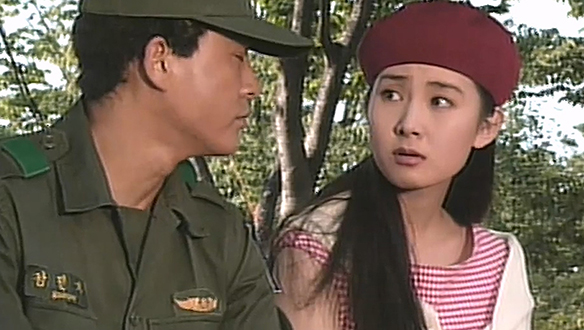
One of the most unforgettable moments in Korean television history occurs when Dae-chi and Yeo-ok briefly reunite at a military checkpoint in China. Separated by a barbed-wire fence, they share a desperate kiss while Choi Kyung-shik’s soaring orchestral theme reaches its emotional peak. The sequence has since become one of the defining scenes in Korean television history.
Historical Scope
Unlike many television dramas of its era, Eyes of Dawn confronted subjects rarely depicted on Korean television, including the experiences of comfort women, the atrocities associated with Unit 731, ideological divisions following liberation, and the tragedy of families torn apart during the Korean War.
Its willingness to portray these difficult chapters of history helped establish the drama as one of the most influential historical series ever produced in South Korea.
Production Scale
Eyes of Dawn was among the most ambitious Korean television productions of its time. Extensive overseas filming, large-scale battle sequences, and cinematic production values raised expectations for historical dramas and demonstrated that television could rival feature films in both scope and storytelling.
Why the Eyes of Dawn Soundtrack Matters
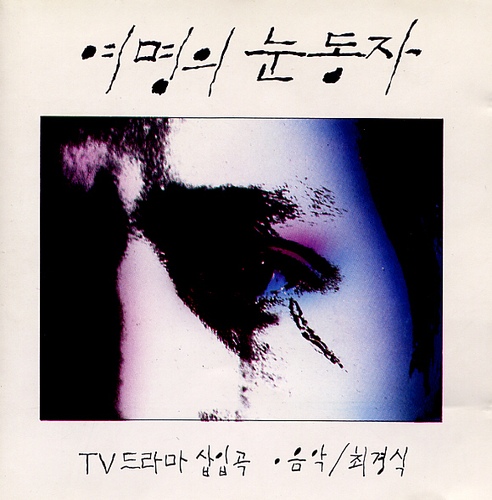
“Eyes of Dawn” (1991) Original Soundtrack
A Pioneer of Symphonic Television Music
Rather than relying primarily on stock background music, Choi Kyung-shik created an expansive orchestral score featuring sweeping strings, dramatic brass, and recurring musical motifs. The soundtrack demonstrated that original television music could stand on its own as a complete artistic work beyond the drama itself.
Music as Historical Storytelling
The score did far more than accompany the narrative—it became part of the drama’s emotional language. The main theme underscored the tragedy of war, separation, and national division, strengthening the audience’s emotional connection to both the characters and the historical events unfolding on screen.
A Foundation for Modern K-Drama OSTs
The success of Eyes of Dawn helped establish original music as an essential pillar of Korean television storytelling. Its influence can be seen in later landmark dramas such as Jealousy (1992), Pilot (1993), and Hourglass (1995), all of which further elevated the importance of original drama soundtracks.
Legacy
More than three decades after its original broadcast, Eyes of Dawn remains one of the defining achievements in Korean television history. Its sweeping orchestral soundtrack, cinematic storytelling, and unflinching portrayal of modern Korean history continue to influence both drama production and television music.
For many viewers, Eyes of Dawn demonstrated that an original drama soundtrack could become just as memorable as the story itself. Its success helped lay the foundation for the golden age of Korean drama music throughout the 1990s and contributed to the evolution of what is now recognized worldwide as the Korean drama OST.