Before the world danced to K-pop, it cried over Korean dramas.
Long before sold-out stadium tours, global streaming platforms, and billion-view music videos, Korean television dramas quietly crossed national borders. They entered living rooms rather than concert halls, introducing audiences to a country many knew little about.
Years before BTS, BLACKPINK, or Parasite became household names, Korean dramas had already begun shaping the world’s perception of Korea. Through stories of love, family, sacrifice, and hope, viewers discovered not only compelling characters but also the rhythms of everyday Korean life.
This was the beginning of Hallyu. Not a marketing campaign. Not a government project. Simply stories that people could not stop watching.
Welcome to Part 2 of our five-part series exploring the historical evolution of the Korean Wave.
Post Highlights
Before K-pop, There Were K-Dramas
Television became Korea’s first successful cultural export, introducing international audiences to Korean storytelling, language, traditions, and everyday life.
The First Spark in Greater China
The Korean Wave did not begin with an official strategy. It began when viewers across mainland China, Taiwan, and Hong Kong fell in love with Korean dramas.
Winter Sonata and Japan
Winter Sonata became more than a television series. It became a shared cultural memory that transformed the relationship between Japanese audiences and Korean popular culture.
Dae Jang Geum: A Global Ambassador
Broadcast in more than ninety countries, Dae Jang Geum introduced global audiences to Korean history, cuisine, traditional medicine, Hanbok, and court culture.
Why Korean Dramas Connected Across Cultures
Their success was never based on spectacle alone. Emotional sincerity, tightly structured storytelling, memorable music, and universal themes allowed Korean dramas to resonate with audiences everywhere.
The Korean Wave (Hallyu): A Five-Part Series
| Part | Title & Key Focus Area | Status |
|---|---|---|
| Part 1 | What Is Hallyu? The Birth of Korea’s Cultural Wave | Completed |
| Part 2 | The Rise of Korean Dramas: The First Face of Hallyu | Currently Reading |
| Part 3 | From Seo Taiji to BTS: The Evolution of K-pop | Upcoming |
| Part 4 | Beyond Entertainment: How Hallyu Became a Lifestyle | Upcoming |
| Part 5 | The Legacy of Hallyu: Culture Without Borders | Upcoming |
Chapter 1: The First Spark in Greater China
별은 내 가슴에 - A Wish Upon a Star, 16회, EP16
Hallyu did not begin with a carefully planned strategy. It began because people genuinely enjoyed Korean stories.
In the late 1990s, audiences across mainland China, Taiwan, and Hong Kong began discovering Korean television almost by accident. Korean dramas offered something familiar yet refreshingly different. The settings were modern, the characters felt authentic, and the emotions were expressed with remarkable sincerity.
Everything changed in 1997. When China’s state broadcaster CCTV aired the Korean family drama What Is Love? (사랑이 뭐길래), few expected it to become a phenomenon. Centered on family relationships and generational conflict, the series achieved extraordinary ratings and demonstrated that Korean stories could resonate deeply beyond Korea’s borders.
Soon afterward, Star in My Heart (별은 내 가슴에) became another regional success. The romantic drama captivated viewers throughout Greater China while turning actor and singer Ahn Jae-wook into one of Asia’s earliest cross-border Korean stars.
As journalists in China watched Korean television grow rapidly in popularity, they searched for a way to describe what they were witnessing. In 1999, they coined the term Hánliú (韓流)—literally, “the Korean Wave.”
The name was born not from Korean promotion but from overseas observation. Before Korea tried to export a cultural movement, international audiences had already discovered one.
Chapter 2: Winter Sonata: More Than a Drama, a Memory
겨울연가(Winter Sonata) MV_처음부터 지금까지 (2002)
For many Japanese viewers, Winter Sonata (겨울연가) was never simply another television drama. It became a memory.
When the series aired on NHK in 2003, its gentle romance arrived at exactly the right moment. Instead of fast-paced plots or sensational storytelling, it offered quiet emotions, lingering glances, snowy landscapes, and a love story built on patience rather than spectacle.
Many viewers—particularly middle-aged women—found something they felt modern television had gradually lost: warmth, sincerity, and emotional comfort.
The response exceeded every expectation. Lead actor Bae Yong-joon became affectionately known as “Yonsama,” an honorific rarely given to a foreign celebrity in Japan. Fans traveled to Chuncheon and Nami Island to visit filming locations, while bookstores, travel agencies, and retailers experienced an unprecedented boom connected to the drama.
More importantly, Winter Sonata changed perceptions. For many Japanese viewers, Korea became more than a neighboring country. It became a place associated with beautiful landscapes, heartfelt storytelling, and shared human emotions. In its own quiet way, the drama encouraged curiosity, conversation, and cultural understanding across borders.
What made Winter Sonata especially significant was who it reached. Early Hallyu in Japan was not driven primarily by teenagers or pop-music fandom. Many of its most passionate followers were middle-aged women—an audience rarely associated with the youth-centered image that would later define global K-pop. This is an important distinction. Hallyu did not begin with a single global demographic. It expanded because different forms of Korean culture found different audiences in different places.
Chapter 3: Dae Jang Geum: A Global Cultural Tradition
[Happy Time] drama ‘Dae Jang Geum’ OST - MBCentertainment
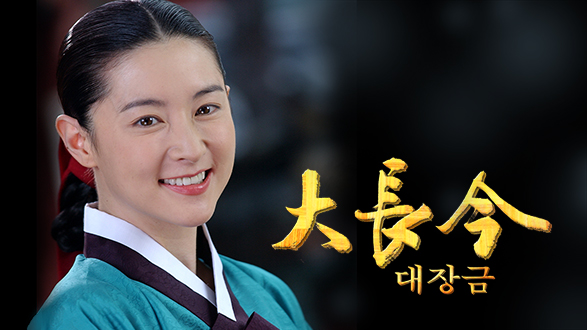
If Winter Sonata introduced Korea to Japan, Dae Jang Geum (대장금 / Jewel in the Palace) introduced Korea to the world.
Few television dramas have served as cultural ambassadors as successfully as Dae Jang Geum. Premiering in 2003, the historical drama followed the remarkable journey of an orphaned palace cook who rose through determination, compassion, and unwavering integrity to become the first female royal physician in the Joseon Dynasty. While deeply rooted in Korean history, its themes of perseverance, justice, and hope spoke a universal language.
Audiences did not need to understand Korean history to understand Jang Geum. They understood her courage.
That emotional connection allowed the drama to travel farther than almost anyone expected. Broadcast in more than ninety countries, Dae Jang Geum became one of the defining cultural exports of early Hallyu. In Iran, it reportedly reached viewership ratings of over 80 percent, while audiences across the Middle East, Southeast Asia, Europe, Africa, and Latin America embraced the series with equal enthusiasm.
Unlike most successful dramas, however, Dae Jang Geum offered something beyond entertainment. It invited viewers into an entire civilization.
Why Dae Jang Geum Matters
Many successful dramas create memorable characters. Dae Jang Geum created lasting curiosity. It demonstrated that television could introduce an entire cultural heritage without feeling like a history lesson. Through one compelling story, audiences encountered Korean cuisine, traditional medicine, Hanbok, architecture, philosophy, and values as living parts of everyday life rather than museum artifacts. Its influence helped transform Korean culture itself into something the world wanted to understand.
For many international audiences, this was their first meaningful introduction to Korean heritage. They discovered royal court cuisine prepared with extraordinary care rather than simple recipes. They encountered traditional herbal medicine built upon centuries of accumulated knowledge. They admired the elegance of Hanbok, the discipline of palace etiquette, and the Confucian ideals that shaped relationships between teachers, rulers, parents, and children.
The series transformed Korean culture into something people could experience emotionally instead of simply learning academically. After watching the drama, many viewers began searching for Korean food, reading about Korean history, planning trips to Korea, and becoming curious about the traditions behind what they had seen on screen. In that sense, Dae Jang Geum did not simply tell a Korean story. It made people want to discover Korea itself.
Chapter 4: Why Korean Dramas Connected Across Cultures
Why did Korean dramas resonate with audiences from such different countries? There was never a single formula. Instead, viewers around the world responded to many of the same qualities.
| Creative Pillar | Universal Narrative Appeal |
|---|---|
| Emotional Honesty | Focused on ordinary people facing recognizable struggles—love, family, friendship, sacrifice, ambition, regret, and hope—rather than spectacle alone. |
| Family & Moral Values | Embedded respect for parents, responsibility toward siblings, and moral integrity into narrative conflict, reflecting values that audiences worldwide immediately recognized. |
| Complete Single-Season Arcs | Offered tight, single-season stories where viewers could invest emotionally knowing the story would reach a satisfying conclusion instead of continuing indefinitely. |
| Cinematic Music & OSTs | Pioneered Original Soundtracks that became part of the emotional identity of each series, making single songs evoke specific scenes, characters, or feelings years later. |
Beautiful cinematography, carefully chosen filming locations, memorable fashion, and polished direction further made Korean dramas visually distinctive long before global streaming platforms increased their international visibility. Individually, none of these qualities fully explains the success of Korean dramas. Together, they created a storytelling style that audiences around the world found remarkably easy to embrace.
Perhaps the most important factor was balance. Early Korean dramas were culturally specific without requiring viewers to understand Korea first. Audiences could recognize the emotions immediately—love, parental conflict, ambition, sacrifice—while gradually encountering unfamiliar food, language, customs, and social relationships. The stories provided familiarity; Korea provided discovery. That combination would become one of Hallyu’s enduring strengths.
Chapter 5: The Gateway to a Cultural Wave
Before K-pop became Korea’s global symbol, Korean dramas had already opened the door.
Week after week, they entered homes across Asia, the Middle East, Europe, Africa, and Latin America. Viewers who initially came for a love story often stayed to discover something much larger. They became curious about Korean food, searched for filming locations, learned simple Korean expressions, and listened to drama soundtracks long after the final episode ended.
Some eventually began studying the Korean language. Others planned their first trip to Korea. Many later became fans of Korean films, television programs, and eventually K-pop itself.
In this way, Korean dramas accomplished something extraordinary. They did not merely entertain international audiences. They created lasting curiosity. And curiosity became the foundation upon which the rest of Hallyu would grow.
Looking Ahead
Television dramas introduced Korea to the world. Popular music would soon carry that story even further.
In Part 3, we move from the television screen to the concert stage as we explore From Seo Taiji to BTS: The Evolution of K-pop—the story of how Korean popular music evolved from a domestic industry into one of the most influential cultural movements of the twenty-first century.
Curator’s Note
Hallyu did not begin with billion-dollar entertainment companies. It did not begin with social media. It did not begin with algorithms.
It began much more quietly.
Someone, somewhere outside Korea, sat down to watch a Korean drama. They finished one episode. Then they wanted to watch another.
Sometimes, history begins exactly like that.