The Three Lives of “Now”: How an International Pop Hit Became a Korean Classic
For many Koreans who grew up in the 1980s, the opening notes of “Now” (이제는) immediately evoke Seoul Family (서울훼미리).
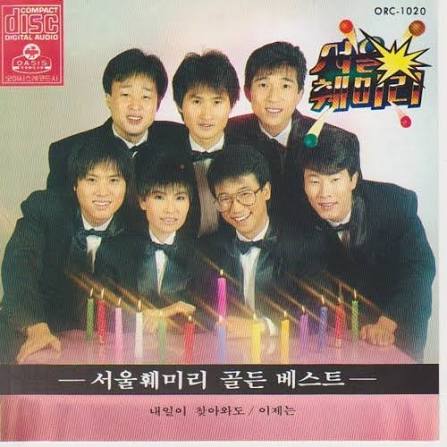
Released in 1987, the song became one of the band’s best-known recordings, powered by the contrasting voices of Wi Il-cheong (위일청) and Kim Seung-mi (김승미).
But the melody had already lived another life.
Three years earlier, it had appeared as “When the Rain Begins to Fall,” a dramatic synth-pop duet by Jermaine Jackson and Pia Zadora. Nearly four decades later, the melody returned once again when PSY and Hwasa revisited the Korean version in 2022.
Yet this is more than the story of an original and two remakes.
Each version belongs to a different cultural moment—and, remarkably, the same melody has carried very different emotions across them.
The melody traveled. The emotion changed.
Post Highlights
Seoul Family Was a Band
Contrary to a common misconception created by the prominence of its two lead singers, Seoul Family was not originally a vocal duo. The group debuted as a mixed-gender band, with Wi Il-cheong and Kim Seung-mi serving as its two front vocalists alongside guitar, bass, keyboards, and drums.
An International Pop Hit Comes to Korea
“Now” originated as the 1984 Jermaine Jackson and Pia Zadora duet “When the Rain Begins to Fall,” a synth-driven pop song that became particularly successful in Europe.
Same Melody, Different Story
The Korean adaptation did not simply translate the original lyrics. While the English song expresses devotion and reassurance between lovers, “Now” turns the same soaring melody into a song about separation, memory, and trying to let go.
Another Life in 2022
PSY and Hwasa revived the Korean version for PSY 9th, transforming a late-1980s Korean favorite into a playful retro performance for a new generation.
Key Information
| Category | Details |
|---|---|
| Korean Title | “Now” (이제는) |
| Korean Artist | Seoul Family (서울훼미리) |
| Korean Release | 1987, Seoul Family Pops Collection |
| Front Vocalists | Wi Il-cheong (위일청), Kim Seung-mi (김승미) |
| Original Song | “When the Rain Begins to Fall” |
| Original Artists | Jermaine Jackson & Pia Zadora |
| Original Release | 1984 |
| Modern Version | PSY feat. Hwasa — “Now” (2022) |
| Musical Journey | 1980s international synth-pop → Korean band adaptation → contemporary K-pop retro revival |
Before “Now”: Seoul Family Was a Band
Before looking at the song itself, it is important to clarify what Seoul Family actually was.
The name is sometimes remembered today as if it referred primarily to the pairing of Wi Il-cheong and Kim Seung-mi. That is understandable: their contrasting voices became one of the group’s most recognizable characteristics.
But Seoul Family began as a band.
At the time of its first album in 1986, Seoul Family was a six-member mixed-gender group consisting of vocalists Wi Il-cheong and Kim Seung-mi, guitarist Kim Jae-deok, bassist Kim Jae-kyung, keyboardist Ahn Byung-joo, and drummer Park Sang-hyun.
The band’s musical identity was also broader than a single genre.
Rooted partly in rock, its repertoire moved through AOR-influenced pop, ballads, adult contemporary music, and other styles common to Korean popular music of the period.
At the center were its two singers.
Wi Il-cheong’s powerful, husky delivery and Kim Seung-mi’s sharper, high-register voice created a distinctive vocal contrast. Their voices could function separately, answer one another, or come together in harmony.
That combination became especially effective when Seoul Family turned to a dramatic international pop duet.
Chapter 1: An American Song That Became Bigger in Europe
In 1984, Jermaine Jackson and Pia Zadora released “When the Rain Begins to Fall.”
Recorded in connection with the film Voyage of the Rock Aliens, the song combined an emphatic duet format with glossy synthesizers and a large, instantly memorable chorus.
The film itself never achieved comparable cultural longevity.
The song did.
Particularly successful in Europe, “When the Rain Begins to Fall” reached No. 1 in several countries and became one of the more recognizable international pop duets of the period.
Its emotional message was essentially reassuring.
The two voices promise support and constancy: when difficult times arrive, one will be there for the other.
That emotional premise is important.
Because when the melody arrived in Korea, its story changed.
Chapter 2: Seoul Family Changes the Emotion
In 1987, Seoul Family included “Now” (이제는) on Seoul Family Pops Collection, an album built around Korean adaptations of international pop songs.
Musically, the connection to “When the Rain Begins to Fall” was unmistakable.
Emotionally, however, “Now” became something different.
The Korean lyrics are not a direct translation of the English original.
Instead of two lovers promising to remain together, “Now” looks backward at a relationship that has already disappeared.
The narrator remembers happier days, struggles to forget, and wonders whether the other person has already erased those memories.
The transformation is striking.
The same ascending melody that supported reassurance in the original now carries longing and loss.
This was not simply a matter of changing English words into Korean ones.
It was a process of cultural adaptation.
The melody remained recognizable, but a new emotional narrative allowed Korean listeners to experience it as a song belonging to their own popular-music culture.
Why Wi Il-cheong and Kim Seung-mi Mattered
“Now” also demonstrates why Seoul Family’s two-vocalist front line worked so well.
Wi Il-cheong brought a rough-edged, powerful vocal tone, while Kim Seung-mi’s voice provided a brighter and more piercing contrast.
The arrangement could therefore preserve some of the dramatic call-and-response quality of the international duet while giving it a very different vocal character.
But they should not be separated from the band behind them.
Part of Seoul Family’s identity came from being musicians operating within a full band format at a moment when Korean popular music was rapidly changing.
Seen in that context, “Now” was not simply a Korean man and woman covering an American duet.
It was a Korean band absorbing an international pop song and reshaping it through its own singers, language, arrangement, and audience.
That distinction matters.
Chapter 3: When a Remake Becomes the “Original”
Something interesting happened over the following decades.
For many Korean listeners, Seoul Family’s “Now” effectively became the point of origin.
The Jermaine Jackson and Pia Zadora recording came first historically, but cultural memory does not always follow chronology.
A song becomes ours through repetition.
It plays on the radio. It appears on television. People sing it at karaoke. It becomes attached to particular years, people, fashions, and memories.
Eventually, knowing where the melody originally came from becomes less important than remembering where you first heard it.
This is one reason successful adaptations occupy such an unusual position in popular-music history.
They can begin as borrowed songs and end as cultural memories of their own.
Chapter 4: PSY and Hwasa Return to the Korean Version
Then, in 2022, the song began another life.
PSY recorded “Now” with Hwasa for his ninth studio album, PSY 9th.
What is particularly interesting is which version they chose to revive.
They were not simply producing a contemporary cover of Jermaine Jackson and Pia Zadora’s 1984 recording.
They were revisiting the Korean cultural memory created by Seoul Family.
The familiar Korean lyrics remained, while the performance was rebuilt around PSY and Hwasa’s personalities, retro styling, energetic choreography, and contemporary production.
PSY has explained that he specifically imagined Hwasa singing the song and was reluctant to include it on the album without her.
That decision created another striking generational bridge.
A melody recorded internationally in 1984 had become a Korean hit in 1987.
Thirty-five years after that Korean version, an artist born in 1995 was singing it for an audience that included listeners who had never experienced Seoul Family’s original era.
The song had traveled again.
The Three Lives of “Now”
| Version | Artist | Year | Cultural Identity |
|---|---|---|---|
| First Life | Jermaine Jackson & Pia Zadora | 1984 | International synth-pop duet |
| Second Life | Seoul Family | 1987 | Korean band adaptation and nostalgic pop classic |
| Third Life | PSY feat. Hwasa | 2022 | Retro K-pop reinterpretation |
These are not simply three recordings of the same composition.
They represent three different relationships between a song and its audience.
The first belongs to the international pop landscape of the mid-1980s.
The second became embedded in Korean popular memory.
The third looks back at that Korean memory and turns it into contemporary retro culture.
Recommended Performances
- Jermaine Jackson & Pia Zadora — “When the Rain Begins to Fall” (1984)
Begin with the international original. Pay attention not only to the unmistakable melody but to the relationship between the two voices and the optimistic emotional meaning of the lyrics.
- Seoul Family — “Now” (이제는) (1987)
Then listen to Seoul Family. The melody is immediately familiar, but the emotional landscape has changed. Wi Il-cheong and Kim Seung-mi transform the song through their contrasting vocal styles and Korean lyrics centered on memory and separation.
- PSY feat. Hwasa — “Now” (이제는) (2022)
Finally, watch the PSY and Hwasa version. By this point, the song is no longer presented simply as an adaptation of an overseas hit. It functions as Korean retro pop—a piece of Korea’s own musical past being rediscovered.
Why This Song Matters
Popular music has always traveled.
Melodies cross borders. Musicians borrow styles. Songs are translated, rewritten, sampled, covered, forgotten, and rediscovered.
But the history of “Now” demonstrates something more interesting than simple musical borrowing.
A song can change cultural ownership without changing its melody.
“When the Rain Begins to Fall” arrived in Korea as an international pop song. Seoul Family retained its musical foundation but gave it another language, another emotional story, and another place in popular memory.
By the time PSY and Hwasa returned to it in 2022, they were not merely looking back at an American song from 1984.
They were looking back at Korean pop culture in 1987.
That difference tells us something important about how popular music survives.
Songs do not travel through history unchanged.
Audiences change them too.
Curator’s Note
One of the most fascinating things about exploring older Korean popular music is discovering how international its history has always been.
Long before the term “K-pop” existed, Korean musicians were listening to music from abroad, performing it, translating it, adapting it, and sometimes transforming it so completely that the Korean version developed a cultural life independent of its source.
“Now” is one of my favorite examples of that process.
For many Korean listeners, the first memory attached to this melody is not Jermaine Jackson or Pia Zadora. It is Seoul Family.
That does not erase the original.
If anything, knowing the song’s history makes each version more interesting.
What fascinates me most is the change in emotion. The international original uses its enormous chorus to promise that two people will remain together. Seoul Family takes essentially the same musical climax and fills it with the sadness of realizing that those days are already gone.
Same melody.
Almost the opposite emotional direction.
And decades later, PSY and Hwasa change its cultural meaning once again. What had once been a contemporary Korean hit now becomes “retro”—music through which a younger generation can play with the sound, fashion, and performance style of an earlier Korea.
This is why I don’t think the history of remakes should be reduced to the question of which version came first.
The original matters. Credit matters. Musical history matters.
But what happens after a song travels matters too.
Sometimes another language gives a melody another story. Another generation gives it another memory. And eventually a song that came from somewhere else can become deeply embedded in the cultural history of somewhere new.
“Now” traveled from an international 1980s pop hit to a Korean band recording, and then from Korean nostalgia to contemporary K-pop.
The melody survived all three journeys.
Its meaning did not.