Before streaming platforms, digital downloads, and even nationwide music charts became part of everyday life, South Korea had its own unique music ecosystem known as Gilboard (길보드).
A combination of the Korean word gil (길, meaning “street”) and Billboard, Gilboard referred not to an official music chart but to the vibrant street culture surrounding cassette vendors who sold unofficial compilation tapes throughout the late 1980s and early 1990s.
More than simply a marketplace, Gilboard became an important gateway through which many Koreans discovered the latest domestic hits alongside Western pop, Eurodance, hip-hop, New Jack Swing, Japanese music, and Hong Kong pop. Although it existed outside the official music industry and relied heavily on informal duplication, Gilboard played a significant role in shaping the musical tastes of an entire generation before the emergence of modern K-pop.
Today, it is remembered as one of the most distinctive chapters in Korea’s pre-digital music history.
Post Highlights
Korea’s Unofficial Street Music Chart
Gilboard reflected street-level music popularity through cassette vendors rather than official record sales.
The Sound of Korea’s Streets
Mobile pushcarts equipped with large speakers transformed sidewalks into open-air listening spaces, introducing the latest dance music to passing crowds.
The Birth of Korea’s Mix Tape Culture
Gilboard vendors created custom compilation tapes and dance medleys that anticipated later DJ mix culture.
A Gateway to Global Music
Western pop, Eurodance, New Jack Swing, Japanese music, Hong Kong pop, and Korean dance music reached young listeners through Gilboard long before digital streaming.
A Cultural Phenomenon with Two Sides
While Gilboard expanded access to music, it also highlighted the growing need for stronger copyright protection and sustainable support for artists.
Key Information
| Category | Details |
|---|---|
| Name | Gilboard (길보드) |
| Active Period | Late 1980s – Mid 1990s |
| Type | Unofficial street music culture and cassette market |
| Main Format | Unofficial cassette compilations and mixtapes |
| Typical Vendors | Mobile street carts and roadside cassette stalls |
| Musical Influence | Dance music, Eurodance, New Jack Swing, Hip-Hop, Pop |
| Historical Significance | Helped shape youth music culture and street-level popularity before the K-pop industry emerged |
Why Was It Called “Gilboard”?
The name Gilboard combines the Korean word gil (“street”) with Billboard, reflecting its role as an unofficial street-based music chart rather than a formally organized ranking.
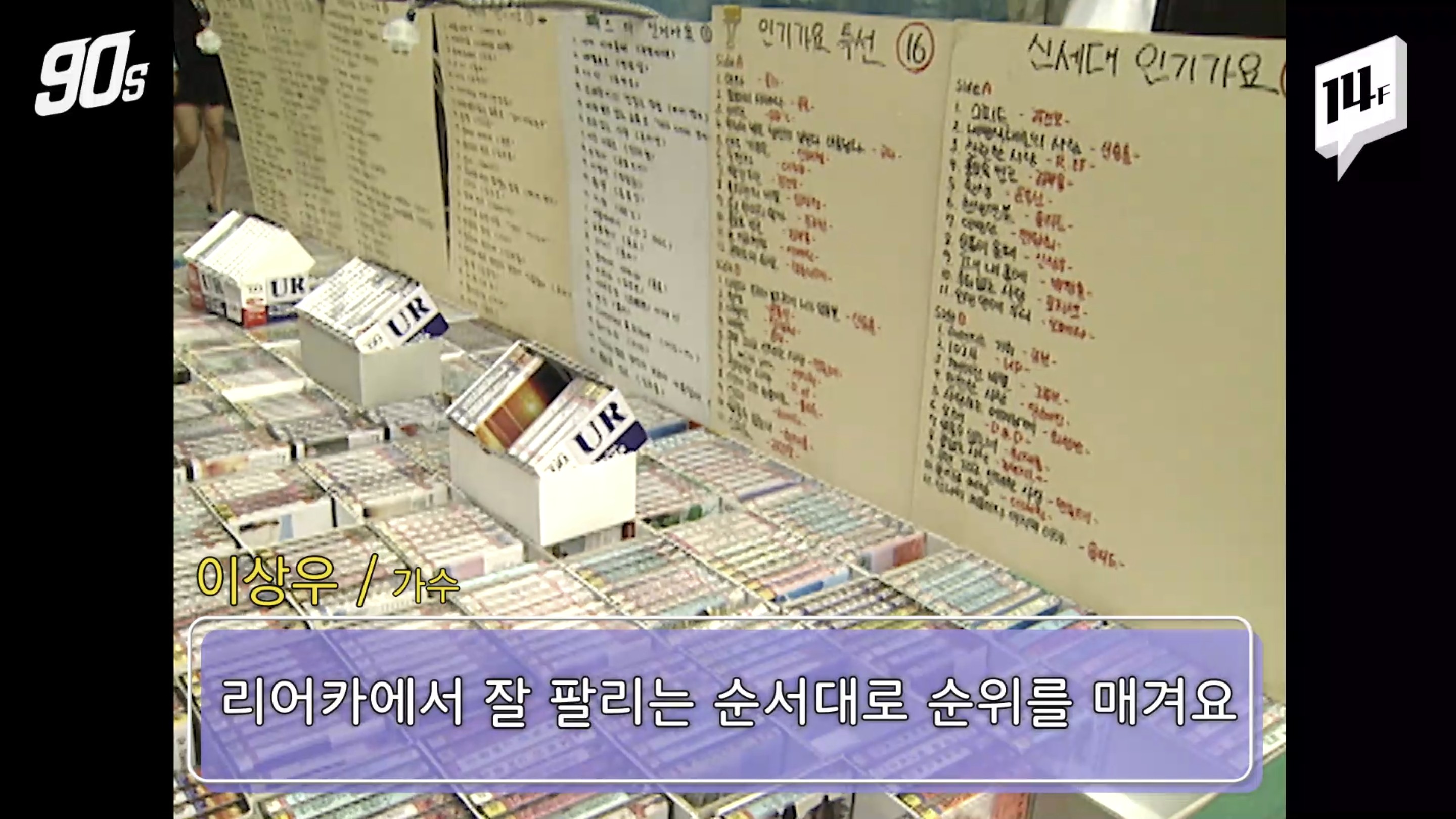
Unlike Billboard, Gilboard had no central organization or standardized methodology. Instead, cassette vendors displayed handwritten lists of their best-selling tapes, giving customers an idea of which songs were currently popular in local neighborhoods.
Over time, these informal rankings became collectively known as the Gilboard Chart.
The Sound of Korea’s Streets
One of the defining images of Gilboard was the mobile cassette cart.
Rather than operating from conventional record stores, many vendors sold tapes from pushcarts equipped with oversized speakers. Throughout the day, the latest dance hits echoed through busy shopping streets, bus terminals, and traditional markets, attracting pedestrians and creating lively public listening spaces.
Vendors competed for customers by playing the latest hits at high volume through oversized speakers, making popular songs instantly recognizable to anyone passing by.
Long before streaming algorithms recommended songs, the streets themselves served as an informal music discovery platform.
A Gateway to Global Music
During the late 1980s and early 1990s, imported albums were expensive and often difficult to obtain.
Gilboard emerged as an informal music market that gave listeners easier access to a wide variety of music, including:
- American pop
- Eurodance
- New Jack Swing
- Hip-hop
- Japanese pop
- Hong Kong pop
- Emerging Korean dance music
For countless young listeners, Gilboard became their first exposure to global music trends that would later influence Korean artists and producers.
The Birth of Korea’s Mix Tape Culture
Gilboard offered more than simple cassette duplication.
Many vendors created their own compilation tapes, selecting popular songs from different artists and arranging them into continuous listening experiences. Dance tracks were often edited into medleys, transitions were shortened, and tempos were occasionally adjusted to maintain energy.
These homemade compilations became some of Korea’s earliest forms of locally produced mix tapes.
Alongside the famous Highway Medleys (고속도로 메들리) sold at highway rest stops, these tapes became especially popular among drivers and travelers, making dance medleys a familiar soundtrack on Korea’s highways during the 1990s.
Gilboard and the Rise of Korean Dance Music
Gilboard played an important role in popularizing dance-oriented music during the early 1990s.
Many artists who later became household names—including Hyun Jin-young, DEUX, Noise, Roo’ra, R.ef, DJ DOC, Turbo, and Two Two—were already circulating widely through Gilboard culture, where energetic dance tracks spread rapidly through cassette compilations and street vendors.
Songs that were played repeatedly through Gilboard speakers often became indicators of street-level popularity, sometimes gaining widespread public recognition before receiving extensive exposure on television.
As a result, Gilboard helped accelerate the spread of contemporary dance music throughout Korea.
Songs That Became Gilboard Favorites
Several songs became closely associated with Gilboard culture, gaining enormous popularity through street cassette vendors before or alongside mainstream media exposure.
🎥 Lim Jong-hwan – “I Just Walked” (그냥 걸었어) KBS Gayo Top 10 (1994)
A defining street-pop anthem of 1994 that resonated across Korea’s mobile cassette vendors.
Released in the early 1990s, “I Just Walked” became one of the defining songs of Korea’s street music scene. Its catchy melody and narrative lyrics made it a favorite among cassette vendors, who played it repeatedly through the oversized speakers mounted on their mobile carts. The song became widely recognized on the streets, helping establish it as one of the signature hits of the Gilboard era.
🎥 Maronie – “Cocktail Love” (칵테일 사랑) KBS Gayo Top 10 (1994)
One of the biggest pop hits of 1994 and a staple track on Gilboard compilation tapes.
Released in 1994, “Cocktail Love” became one of the biggest pop hits of the decade and a staple of Gilboard compilation tapes. Its bright melody, memorable chorus, and refreshing summer atmosphere made it especially popular among young listeners.
More than thirty years later, “Cocktail Love” remains one of the most recognizable Korean pop songs of the era and continues to evoke nostalgia for the Gilboard generation.
Why These Songs Matter
Songs like “I Just Walked” and “Cocktail Love” illustrate how Gilboard functioned as more than a marketplace for cassette tapes. Repeated exposure through street speakers and compilation tapes helped certain songs become part of everyday life, demonstrating how informal street culture could amplify musical trends during Korea’s pre-digital era.
The Other Side of Gilboard
Despite its cultural significance, Gilboard was built largely upon unauthorized duplication of copyrighted recordings.
During this period, public awareness of copyright protection in South Korea was considerably lower than it is today. Many consumers viewed inexpensive cassette copies as an affordable way to enjoy popular music, while the legal and commercial music industry was still developing.
However, widespread piracy reduced legitimate album sales and limited the income received by artists, composers, producers, and record companies. The popularity of Gilboard often made it difficult for record companies to estimate genuine consumer demand, complicating investment decisions and artist development.
From today’s perspective, Gilboard serves as both an important cultural phenomenon and a reminder of why intellectual property protection became increasingly important as Korea’s cultural industries matured.
The End of the Gilboard Era
In the mid-1990s, South Korea strengthened copyright enforcement through revisions to laws governing recorded media, making unauthorized cassette markets increasingly difficult to sustain.
At the same time, legitimate CD distribution expanded rapidly, giving consumers greater access to officially released albums. In the following decade, digital music services and portable MP3 players fundamentally changed the way people consumed music.
The disappearance of Gilboard was therefore not simply the decline of a street market. It reflected the broader modernization of Korea’s music industry, where stronger copyright protection and legal distribution became essential for supporting creators and building a sustainable cultural economy.
Visual Archive: The Gilboard Culture
| Archive Element | Description & Cultural Context |
|---|---|
| Street Mobile Carts | Pushcarts equipped with high-powered loudspeakers blasting the latest dance hits in busy shopping districts like Myeongdong and Sinchon. |
| Handwritten Gilboard Charts | Handwritten lists posted on pushcarts ranking the weekly top-requested cassette compilations based on real-time street demand. |
| Bootleg Cassette Tapes | Non-stop dance compilations featuring shortened intros, continuous beat transitions, and customized Korean pop medleys. |
| Highway Medleys (고속도로 메들리) | Tapes sold at highway rest stops designed for long-distance drivers, combining trot, dance, and folk hits into continuous non-stop audio tracks. |
Legacy
Gilboard is remembered today not only as a symbol of Korea’s vibrant street music culture, but also as an important reminder of how stronger copyright protection became essential to the long-term growth of the country’s music industry.
It introduced generations of listeners to new musical styles, helped accelerate the spread of dance music, and reflected the energy of Korea’s rapidly changing youth culture during the late twentieth century.
Understanding Gilboard offers valuable insight into how Korean popular music developed long before K-pop became an international phenomenon.
Curator’s Note
Gilboard remains one of the most fascinating chapters in Korea’s musical history because it represents both innovation and contradiction.
It was a place where young people encountered new sounds, global trends, and emerging Korean artists through an energetic street culture unlike anything found today. Yet it also existed within a period when copyright protection was still evolving, limiting the growth of a sustainable music industry.
Remembering Gilboard is not about celebrating piracy. Rather, it is about understanding a unique moment in Korea’s cultural history—a period that shaped the listening habits of a generation while also highlighting the importance of protecting the creators whose work made that culture possible.
Understanding Gilboard means understanding both the passion of Korean music fans and the evolution of a modern music industry built on protecting the artists who create it.